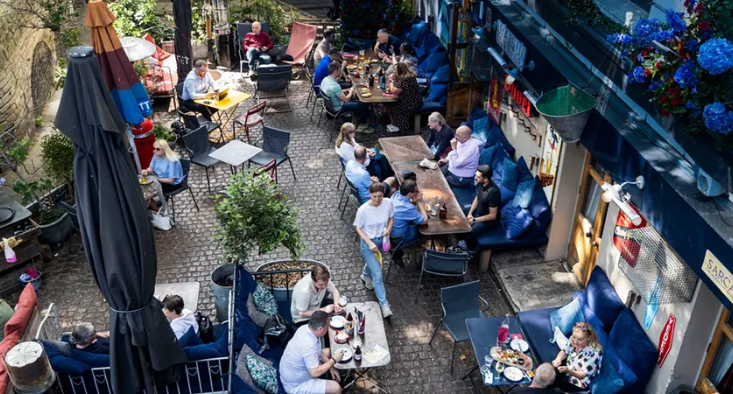
A quiet transformation is unfolding across Britain’s restaurants and pubs, where once-busy dining rooms are increasingly falling silent as rising costs force many businesses to shut their doors.
Across the country, hospitality owners describe a growing financial strain that is pushing independent venues to the brink. In west London, one neighbourhood bistro owner recently confirmed he will close in September, despite steady customer traffic. The former banker-turned-restaurateur said demand is not the issue, but the balance sheets no longer add up.
Industry groups say his case is far from isolated. UKHospitality estimates that roughly one pub or restaurant closed every day last year, while campaigners from Hospitality Rising report rising numbers of chefs leaving the profession and venues being converted into coffee shops or convenience stores.
Business leaders point to a series of policy and cost pressures converging at once. From April 2025, employer National Insurance rose to 15 per cent, while the threshold for payments was lowered to £5,000. At the same time, the National Living Wage increased to £12.21 an hour, and business rates relief was reduced from 75 per cent to 40 per cent. Industry estimates suggest these changes collectively add around £3.4 billion annually to sector costs.
Hospitality groups also criticise the UK’s value-added tax regime, arguing that it leaves British operators at a disadvantage compared with European competitors. Recruitment constraints and limits on overseas labour have added further strain, particularly for kitchens and front-of-house staffing.
Government ministers have defended their economic strategy, urging businesses to adapt through productivity gains and new technologies. Proposals to integrate artificial intelligence into service roles have been floated as part of wider efficiency reforms, although industry figures question how practical such solutions are in customer-facing environments.
Hospitality, however, remains one of the UK’s largest employers, supporting around 3.5 million jobs. Many of those positions are held by younger workers entering the labour market for the first time. Sector advocates argue that restaurants and pubs provide essential training grounds for communication, teamwork, and service skills that extend far beyond the industry itself.
The impact of closures, they say, extends well beyond individual businesses. Supply chains linked to food producers, laundries, transport firms, and local suppliers all feel the effects when a venue shuts down.
As more establishments struggle to stay open, industry voices warn that the broader ecosystem supporting Britain’s high streets is under increasing pressure. While government officials maintain that reforms are aimed at long-term growth, business owners continue to describe a more immediate reality—one in which rising costs are reshaping the landscape of everyday dining and community life across the country.