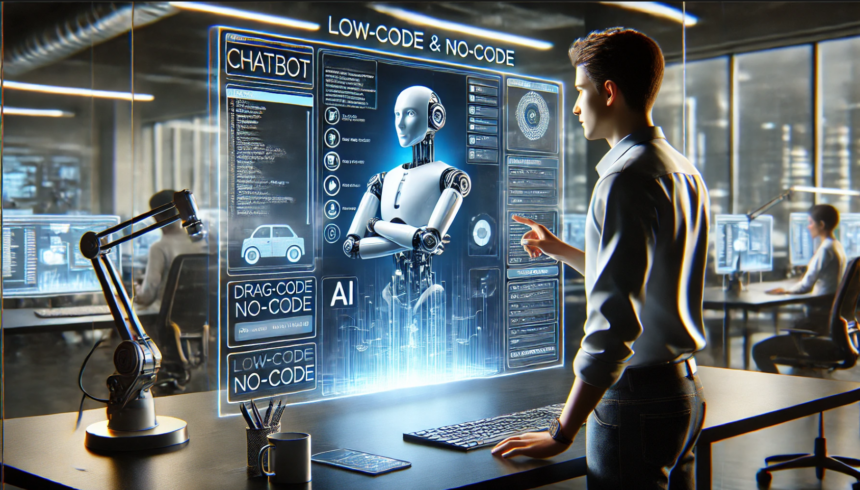
Web application development looks completely different today than it did just a few years ago. Tasks that used to take teams weeks, building responsive frontends, setting up secure backends, wiring up databases, adding authentication, integrating payments, and getting everything live can now happen in a matter of hours. Modern tools read plain descriptions of what you want, write clean code, create good-looking interfaces, run tests automatically, and even handle hosting. Professional developers get to move much faster, while people who’ve never written a line of code founders, designers, marketers, small business owners can finally build real, working software themselves. By early 2026, these AI-assisted workflows have gone mainstream, and studies show developers are finishing projects 40–70% faster on average.
A great example of this new wave is Fabricate, an AI-powered app builder that launched in February 2026. You simply tell it in everyday language what kind of app you want. You can even upload a screenshot or design mockup as inspiration. Within seconds the system starts generating a complete full-stack web application. It builds the frontend with React and TypeScript, styles everything beautifully with Tailwind CSS, and sets up serverless backend logic behind the scenes. Common features like user sign-up/login, databases, Stripe payments, email sending, and third-party API connections just appear when you mention them. As the code comes together you watch a live preview update in real time. When you’re happy, one click deploys the app to Cloudflare’s edge network automatic SSL, global CDN, instant scaling, the works. Best part? You own the clean, well-structured source code and can export it anytime, so you’re never locked in. Whether you’re making a SaaS dashboard, an online store, a personal finance tracker, a simple chat tool, or a portfolio site, people are routinely going from idea to working prototype in under ten minutes and to something polished in less than an hour.
The rest of the ecosystem is just as impressive. Tools like GitHub Copilot suggest code as you type, Cursor lets you refactor huge projects with a single sentence, and visual builders turn text prompts into clickable prototypes. Design-focused platforms convert rough sketches or descriptions into responsive layouts that actually look professional. All of this is powered by models trained on enormous amounts of real-world code, so they understand modern best practices, catch common mistakes, and connect APIs smoothly. The payoff goes way beyond just saving time. Startups test ideas cheaply and quickly instead of burning months (and money) on unproven concepts. Bigger companies let their engineers focus on the hard, creative problems instead of boilerplate work. Non-technical people can now build and iterate on their own, which means more ideas get tried and more diverse products reach the market. Many of these platforms bake in solid security defaults and help with basic compliance needs, so even bigger organizations feel comfortable using them.
Of course, it’s not perfect yet. Sometimes the generated code has small bugs, performance quirks, or security oversights that need a human eye. Keeping everything maintainable over months or years still benefits from experienced developers. And when you’re dealing with strict regulations, think GDPR, HIPAA, or financial rules, human review becomes non-negotiable. The smartest teams treat these tools like very capable junior developers: great at getting 80% of the way there, but you still guide and polish the last 20%.
Things are only getting more interesting. We’ll soon see systems that watch how users behave, suggest improvements, and automatically roll out updates. You’ll be able to describe apps out loud, sketch them on paper, or point at existing sites and say “make something like that but for my business.” Analysts expect that by the end of the decade most new web apps will start their life inside an AI builder. Bottom line: building for the web used to be mostly about technical skill. Now it’s increasingly about having a clear idea and the ability to describe it. Tools like Fabricate are putting powerful software creation in the hands of almost anyone. As the technology keeps improving, the real limiting factor won’t be code anymore; it’ll be imagination.