Rolls-Royce has moved to calm investor concerns triggered by the ongoing war in Iran, reaffirming that it is still on course to deliver at least £4 billion in underlying operating profit for the year, as aircraft engine activity continues to outperform expectations.
The Derby-based engineering group told shareholders at its annual general meeting this week that recent volatility in its share price was not altering its financial outlook, even after nearly £20 billion was wiped from its market value in recent weeks. The stock had fallen sharply following the escalation of conflict in the Middle East, though it recovered 2.9% in early trading on Thursday to £11.06.
Markets had been unsettled by fears that fighting could disrupt air traffic through the Gulf region, particularly the Strait of Hormuz, a key route for global aviation fuel supplies. Investors worried about potential flight cancellations and reduced long-haul demand, a sector central to Rolls-Royce’s civil aerospace business.
Chief executive Tufan Erginbilgic, who has led a sweeping turnaround effort since taking charge, said operational performance had remained strong despite geopolitical uncertainty. Engine flying hours in the first four months of the year were ahead of internal forecasts, with large engine usage in the first quarter reaching 115% of 2019 levels. The company continues to target 115% to 120% for the full year.
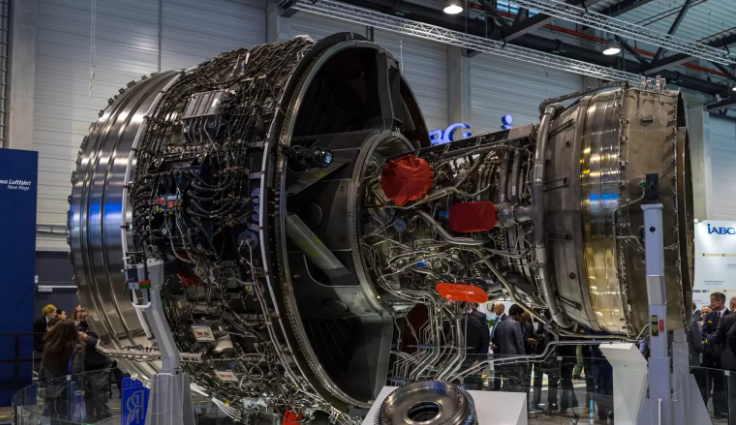
Rolls-Royce reported a notable rebound in Middle East aviation activity, saying Airbus A350 engines—powered by its Trent XWB system—had returned to pre-conflict levels. Airlines in the region, it said, quickly adjusted operations, redeploying aircraft to other international routes and limiting the number of grounded planes.
The group also noted that most aircraft currently out of service due to economic pressures are narrow-body jets, which fall outside its core engine portfolio.
Beyond civil aviation, defence and power systems continue to support growth. Demand is rising for military engines used in platforms such as the Eurofighter Typhoon and naval vessels, while its power division is benefiting from increased investment in data centres and NATO rearmament programmes. The company also highlighted long-term potential in small modular nuclear reactors, backed by UK government support.
Rolls-Royce reiterated its full-year guidance of £4 billion to £4.2 billion in operating profit and free cash flow of up to £3.8 billion.
Erginbilgic said the business remained resilient despite global disruption. “We are taking the necessary actions and expect to fully mitigate the current financial impact of the disruption to our business,” he said.
The update offers reassurance to suppliers across the UK aerospace supply chain, particularly in the Midlands, where Rolls-Royce’s recovery remains a key economic driver despite ongoing geopolitical uncertainty.