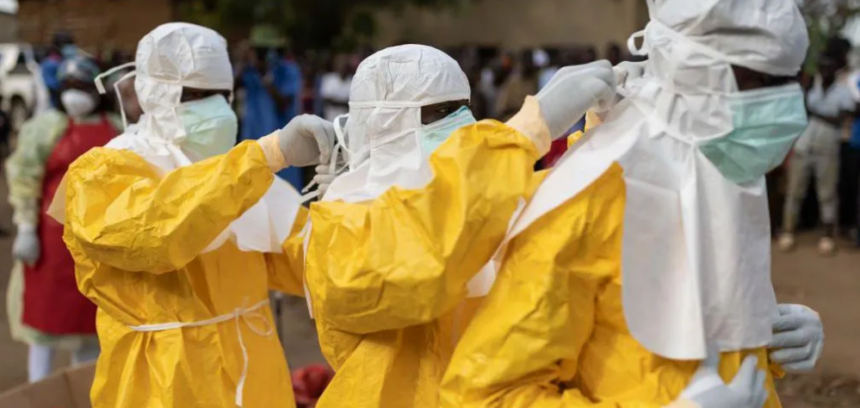
The Ebola outbreak in the Democratic Republic of Congo is drawing renewed international concern after health officials confirmed sustained transmission in a region already facing armed conflict and widespread displacement.
The World Health Organization (WHO) has reported nearly 250 suspected cases and around 80 deaths, warning that the true scale may be larger than current figures suggest. The outbreak, first detected weeks after infections likely began, has raised fears that the virus spread undetected for an extended period in eastern Congo.
Experts say the situation is complicated by the presence of a rare strain known as the Bundibugyo Ebola virus. Unlike the more commonly known Zaire strain, Bundibugyo has been recorded only twice before, in 2007 and 2012, with fatality rates ranging between 30% and 50%.
Dr Anne Cori of Imperial College London said the delayed identification is troubling, noting that transmission may have been ongoing for several weeks before confirmation. WHO officials have warned that this could indicate a “potentially much larger outbreak than what is currently being detected and reported.”
The virus spreads through direct contact with infected bodily fluids, but transmission typically occurs after symptoms begin. Early signs include fever, fatigue and headache, which can progress into severe vomiting, diarrhoea and organ failure. In advanced cases, patients may experience internal and external bleeding.
Health specialists highlight that Bundibugyo Ebola presents unique challenges. There are no approved vaccines or targeted antiviral treatments for this strain, unlike other Ebola variants where experimental or licensed interventions exist. Diagnosis is also difficult, as initial tests in the current outbreak failed to identify the virus, requiring advanced laboratory analysis to confirm its presence.
Professor Trudie Lang of the University of Oxford described the strain as a significant concern, pointing to the limited tools available to control it. Treatment currently relies on supportive care, including fluid management, pain relief and treatment of secondary infections, which can improve survival chances when provided early.
Containment efforts are now focused on rapid case identification, contact tracing and preventing hospital-based transmission. Safe burial practices are also considered critical, as bodies remain infectious after death.
The outbreak is unfolding in areas affected by ongoing conflict and displacement, with more than 250,000 people forced from their homes. Many cases have emerged in mining communities where frequent movement between settlements and borders increases transmission risk.
Despite these challenges, experts note that the country has substantial experience responding to Ebola outbreaks. Dr Daniela Manno of the London School of Hygiene & Tropical Medicine said response capacity is stronger than in past decades, though the outcome will depend on how quickly containment measures are scaled up.
Authorities now face a narrow window to bring the outbreak under control before it expands further.