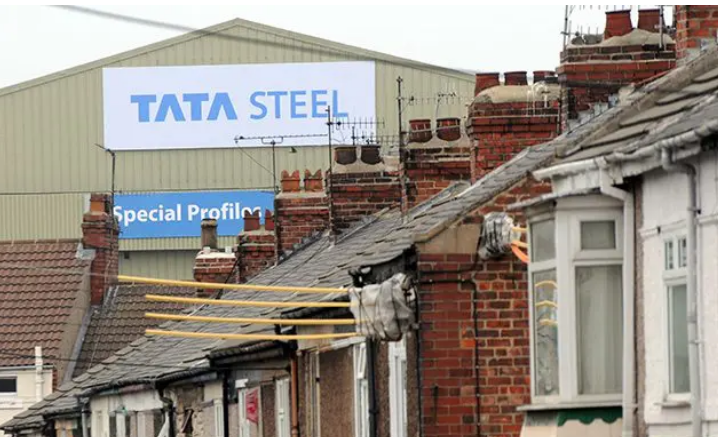
Tata Steel has warned that its £1.25 billion electric arc furnace project at Port Talbot could be delayed by up to eight months after National Grid raised concerns over setbacks in connecting the plant to the high-voltage electricity supply it requires to operate.
The furnace is central to the UK steel industry’s shift toward lower-carbon production and was originally scheduled to begin operations by the end of 2027. It is intended to replace traditional blast furnaces that were shut down two years ago, a move that resulted in the loss of around 2,000 jobs.
The company disclosed the potential delay during an investor briefing, where Tata Steel executive director and chief financial officer Koushik Chatterjee said construction work at the site was progressing, but grid connectivity remained a critical challenge.
“Securing access to high power electricity is critical for our planned transition,” he said, adding that National Grid had formally informed the company of delays in its connection project. “We are in conversation with National Grid and the UK government on resolution of the issues.”
Chatterjee said the setback could push commissioning back by “between six months to eight months,” and possibly longer, while discussions continue on mitigation measures.
Despite the delay, Tata Steel said major construction milestones had already been achieved, including significant demolition work at the Port Talbot site. The electric arc furnace itself began construction in July last year, supported by a £500 million government grant. Earlier this month, the company also completed the controlled demolition of a disused gas holder on site.
National Grid said its responsibilities include building two new substations, installing transformers, and laying around two kilometres of underground cable. It acknowledged that ground conditions, environmental considerations and planning processes had slowed progress, though it maintained that “good progress is being made”.
Electric arc furnaces represent a key part of the UK’s decarbonisation strategy for heavy industry. By melting recycled scrap steel instead of processing iron ore, they can reduce carbon emissions by up to 90 per cent. However, they require large and consistent electricity supplies, making them heavily dependent on grid infrastructure.
That reliance has exposed a broader structural challenge. UK Steel, the industry trade body, has warned that British manufacturers pay some of the highest industrial electricity prices in Europe, with costs reportedly up to 77 per cent higher than in France and Germany.
The Port Talbot project has been positioned by ministers as a flagship of the UK’s green industrial strategy, with the government linking its funding support to the preservation of around 5,000 jobs during the transition.
Any delay, however, risks complicating that narrative. While Tata Steel continues to work with National Grid and Whitehall to adjust timelines, no revised commissioning date has been confirmed.
For the workforce and the wider community, the uncertainty adds to an already difficult transition period. The episode also highlights a wider reality facing Britain’s net zero ambitions: industrial transformation depends not only on new technology, but on the infrastructure needed to power it.