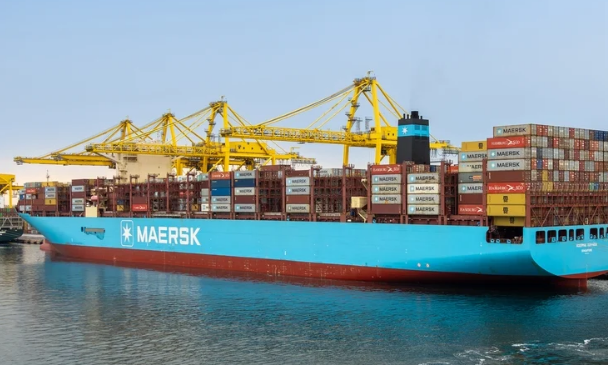
The Danish shipping giant Maersk is increasing its full-year profit guidance for the second time this year after a better-than-anticipated operating profit in the second quarter.
The company reported earnings before interest, taxes, depreciation and amortisation (EBITDA) of $3 billion for the quarter, compared with a median of $2.12 billion among 11 analysts in a poll by Bloomberg. It also was up from $2.3 billion for the same time last year.
The good performance and positive outlook triggered a 6 percent rise in Maersk shares after the results were announced.
The company is closely monitored as a gauge of global trade, as it is the world’s No. 2 shipping company for containers. Its recent performance has been boosted by strong demand, especially from Asia, leading Maersk to boost its container market growth expectations.
The company upgraded its outlook in June, and said global demand for containers would grow by roughly 4 percent in 2016. The latest earnings bulletin has led to another upgrade in its full-year outlook.
Disruption on key international routes has helped Maersk to enjoy improved freight rates. All these events have had a negative impact on the flow of vessels in the Strait of Hormuz and the Red Sea, in the heart of the conflict between the United States and Iran, and in the area of attacks by the Houthis, respectively.
Many shipping companies have been forced to steer clear of one of the world’s most vital shipping routes connecting Asia and Europe, the Suez Canal, in the wake of the security mess in the Red Sea. Rather, ships have been sailing around the Cape of Good Hope in Africa.
Greater distances travelled have led to higher fuel usage, longer transit times and higher operating expenses, while a shorter shipping fleet on certain routes has helped to drive up freight prices.
Some analysts, however, have cautioned that Maersk’s recent success might not necessarily be due to a fundamental shift in the shipping market, but to temporary disruptions. When Red Sea gets back to more normal condition, capacity may become available and freight rates may become under significant pressure.
The Asia-Europe route has been hit the hardest. Ahead of the attacks in the Red Sea, most major shipping firms opted for the longer route around Africa in order to safeguard their vessels and crews from the Suez Canal route.
Recently, German shipping firm Hapag-Lloyd and Maersk revealed that they are planning to resume some operations via the Suez Canal as the security situation begins to improve slowly. An expanded return would help shorten the trips and lower costs for carriers.
Until now, Maersk’s improved performance suggests that better than anticipated freight prices and continued strong demand are keeping the shipping industry afloat, though investors are wondering for how long.