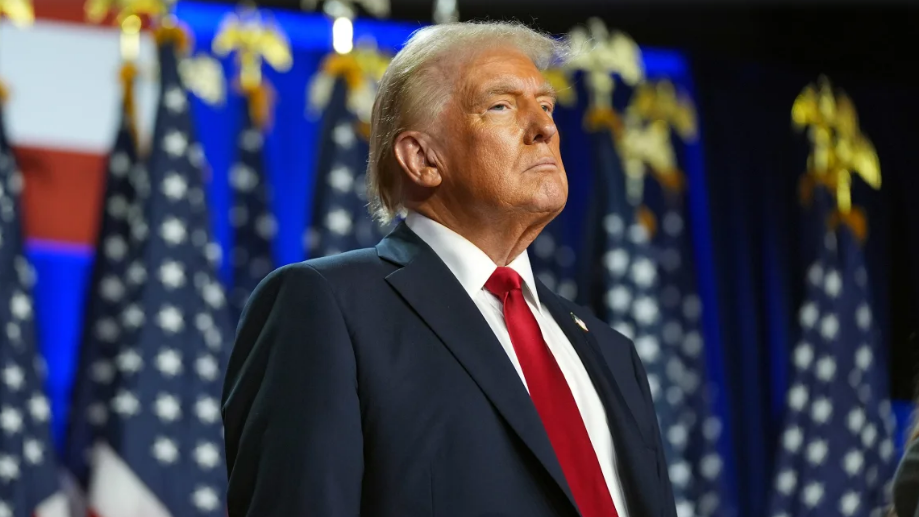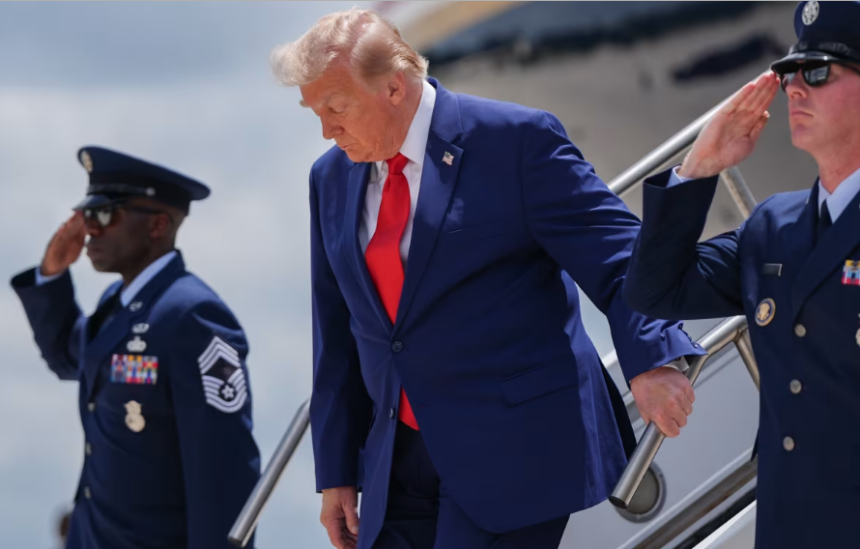
President Donald Trump is facing increasingly difficult choices over Iran as a pause in US air strikes enters its third night, with diplomatic efforts offering a possible path out of the conflict while military escalation remains on the table.
The pause followed 13 consecutive nights of US attacks. The Trump administration says the break is intended to create space for negotiations, but US Ambassador to the United Nations Mike Waltz warned that American forces remain prepared for further action.
“The regime should believe the president when he says they’re locked and loaded, and where all options are on the table,” Waltz said.
Iran has held talks with Oman at deputy foreign minister level in recent days, but there has been no clear indication that Tehran is prepared to abandon its demand for control over shipping through the Strait of Hormuz. The waterway has become the central issue in the latest phase of the conflict.
Trump has attempted to pressure Iran into making concessions through intensified air strikes, but the strategy has not produced a clear diplomatic breakthrough. A further increase in military action, including the possible deployment of ground troops, could bring greater pressure on Tehran but would also risk significant US casualties in a war that remains unpopular at home.
The conflict has also created growing economic and political problems for the administration. Oil prices surged last week before falling sharply on Sunday, while concerns remain over rising petrol costs and global energy supplies. Shipping through the Strait of Hormuz has been severely disrupted, while Yemen’s Iran-backed Houthi rebels have threatened the Red Sea route, another important corridor for oil shipments.
Global crude inventories are also nearing critically low levels, increasing concerns about a wider energy crisis ahead of November’s midterm elections.
Trump could expand attacks to transport infrastructure and power facilities in Iran, but such action would increase suffering among civilians and may not change Tehran’s position. US intelligence assessments have reportedly concluded that recent bombing is unlikely to force Iran to alter its negotiating stance.
Another option would be to extend the economic blockade on Iranian ships and ports. That could weaken government revenues, but might take months to produce results and could provoke renewed Iranian attacks on commercial vessels.
A renewed diplomatic agreement is also possible, although Iran is unlikely to accept a deal unless it regains the authority to regulate and profit from traffic through the Strait of Hormuz.
Republican Senator Bill Cassidy has called for a national discussion involving the president and Congress to find a different approach.
“We need something different,” Cassidy said.
Waltz has argued that Iran is diplomatically isolated, economically weakened and militarily damaged, giving Washington a strong negotiating position. Yet Tehran’s ability to threaten shipping with drones and missiles means it can still impose major costs on the global economy.
A CBS News/YouGov poll found that only 31 per cent of Americans said they clearly understood the situation in the Strait of Hormuz, while 76 per cent said the war had been more difficult than the administration expected.
After nearly five months of conflict, Trump faces a difficult challenge: intensifying the war risks greater casualties and economic damage, while a peace agreement may require concessions that could draw criticism from his political allies.