The brief sigh of relief across global markets lasted barely a day. Brent crude climbed sharply back towards $100 a barrel on Thursday after Iran moved to close the Strait of Hormuz, sending a clear signal that the fragile Middle East ceasefire was already fracturing.
The global benchmark was trading at $98.61 a barrel in early afternoon dealings, up about 4 percent, after plunging as much as 16 percent the previous day to below $91. That earlier drop had been driven by optimism that a two-week pause in hostilities between the United States and Iran could ease tensions and stabilize energy flows.
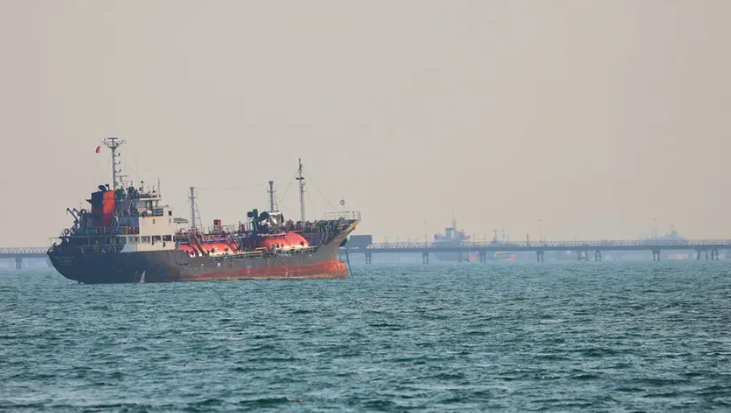
Iran’s move to shut the strategic waterway followed Israeli airstrikes on Hezbollah targets in Lebanon, which Tehran described as a violation of the ceasefire. The Strait of Hormuz is a vital route for global energy supplies, carrying roughly a fifth of the world’s oil and gas. Its closure has raised immediate concerns among governments and businesses about supply disruptions and rising costs.
Sultan Al Jaber, chief executive of Abu Dhabi’s state oil company Adnoc, said Iran appeared to be using control of the strait as a political tool rather than ensuring free navigation. Analysts say such actions could deepen uncertainty for industries that rely heavily on stable energy supplies.
Nigel Green, chief executive of financial advisory firm deVere, warned that the situation leaves a significant share of global oil flows exposed to geopolitical risk. For small and medium-sized businesses already dealing with high energy costs, the renewed volatility adds further pressure.
Stock markets reacted negatively to the developments. The FTSE 100 fell 0.2 percent after posting strong gains the previous day, while Germany’s DAX dropped 1.4 percent and France’s CAC 40 declined 0.7 percent. In Asia, major indexes in Japan, South Korea, and China all closed lower.
Wall Street, which had rallied strongly on Wednesday with the S&P 500 rising 2.5 percent and the Dow Jones Industrial Average gaining nearly 3 percent, was expected to open lower as investor confidence weakened.
US President Donald Trump said American forces would remain in the Gulf until a lasting agreement is secured and respected, warning of serious consequences if the situation deteriorates further.
Meanwhile, Israel intensified its military operations in Lebanon, carrying out its heaviest strikes since the conflict with the Iran-backed Hezbollah group escalated last month. Reports indicate that more than 250 people have been killed in the latest wave of attacks.
The renewed instability highlights the continued vulnerability of global energy markets to geopolitical tensions. With oil prices approaching $100 a barrel once again, businesses are facing renewed uncertainty, particularly in sectors such as manufacturing and logistics that are highly sensitive to fuel costs.