Amazon has begun drone deliveries in the United Kingdom for the first time, rolling out a limited trial in Darlington, County Durham, as the company pushes ahead with its long-delayed Prime Air programme aimed at ultra-fast parcel delivery.
The service will transport packages weighing under 5lb (2.2kg) from a local fulfilment centre to homes within a 7.5-mile radius. Items selected for early deliveries include small household goods such as batteries, beauty products and charging cables, reflecting the kind of urgent, low-weight purchases targeted by the system.
The Darlington operation marks a significant milestone for Amazon, which first announced plans for drone-based deliveries more than a decade ago. Progress has been slowed by regulatory hurdles and technical challenges, making the UK trial an important test of whether the concept can now operate at scale.
One of the earliest participants, local farmer Rob Shield, allowed Amazon to operate from an Airbnb on his land during testing. He described early activity as a novelty that quickly became routine. “Initially it was a novelty, so we were ordering everything under the sun,” he said, adding that curiosity soon gave way to practical use for everyday items.
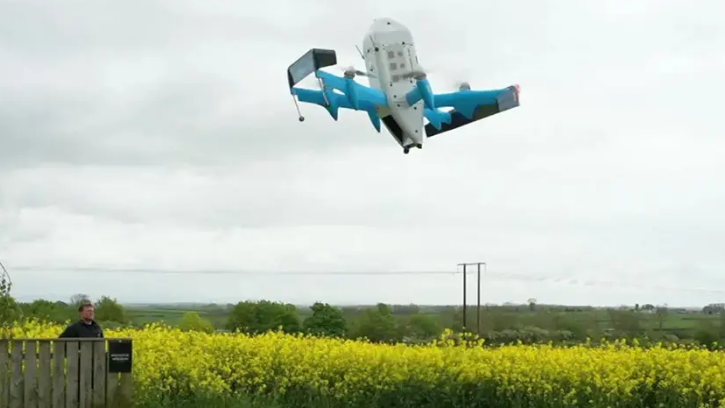
Parcels arrive in small containers and are dropped from a low altitude into designated garden spaces. The visual spectacle has drawn local attention, with residents gathering to watch the drone arrivals during the initial phase of testing.
Amazon says UK deliveries are expected to take around two hours under the current system, while operations in the United States have reached an average delivery time of around 36 minutes. David Carbon, vice president of Amazon Prime Air, said customers consistently prioritise speed, particularly for urgent needs such as medicine or essential supplies.
The company will limit activity in Darlington to around 10 flights per hour and up to 100 deliveries per day. Each drone is monitored remotely, operating beyond visual line of sight with oversight linked to air traffic control at Teesside Airport when necessary.
The MK30 drones used in the trial rely on sensors and GPS navigation to avoid obstacles including buildings, wires and pedestrians. Amazon describes the system as fully autonomous, though human operators remain involved in supervision.
The Civil Aviation Authority has approved the trial until the end of the year, with protected airspace arrangements in place. Darlington Borough Council has welcomed the scheme, describing the town as a testing ground for innovation.
Experts say the technology remains best suited to low-density areas with private outdoor space, limiting its immediate use in urban environments. Safety concerns also remain under scrutiny following isolated incidents in international trials.
For now, Darlington serves as the UK’s first live test of drone delivery at scale, with Amazon positioning the programme as a long-term shift in how small parcels could be delivered across the country.