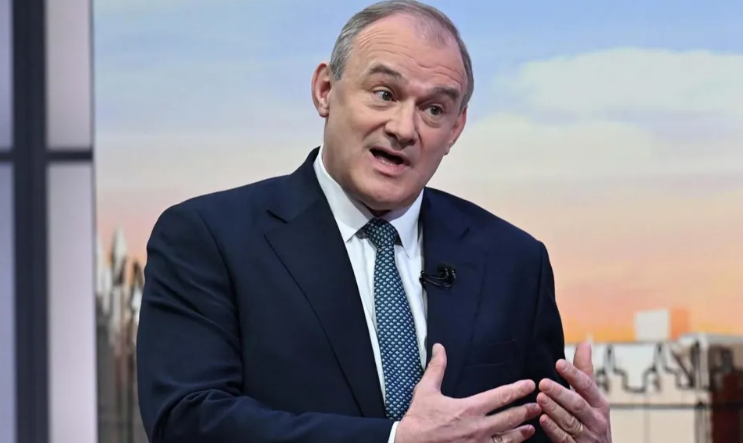
Liberal Democrat leader Sir Ed Davey has urged the government to begin issuing war bonds, arguing that Britain must move more quickly to strengthen its defence capabilities amid rising global threats. Speaking on the BBC’s Sunday with Laura Kuenssberg, Davey said current plans did not go far enough and warned that the UK faced a security environment comparable to a new Cold War.
Under the Liberal Democrats’ proposal, members of the public would be able to loan money to the government through bonds running for two to three years, paying interest at the same rate as standard government bonds. The party estimates the scheme could raise up to £20bn for defence spending. Davey said the initiative would give citizens the opportunity to “support patriotically our defence” at a time of growing international instability.
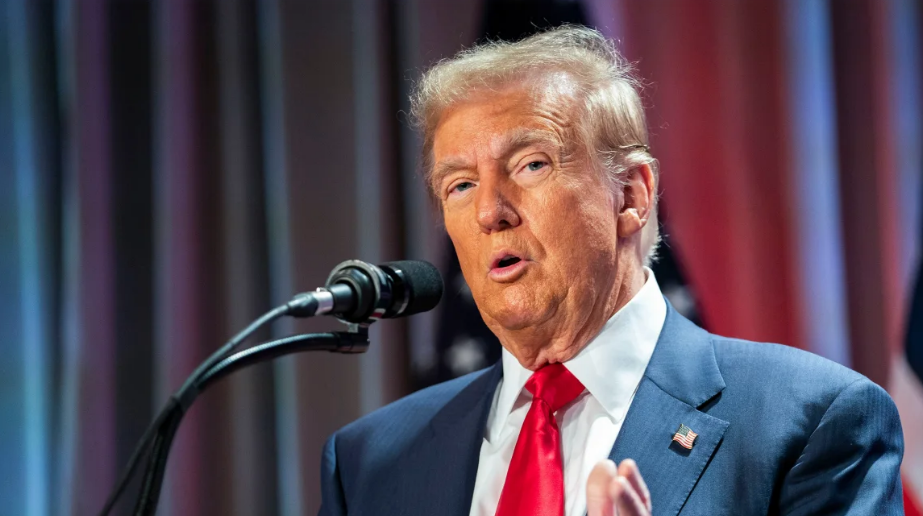
Calls for higher defence spending have intensified since Russia’s full-scale invasion of Ukraine in 2022 and the election of US President Donald Trump, who has repeatedly criticised Nato allies for not contributing enough to collective security. Davey said these developments required a faster response from the UK.
“We’re in almost a Cold War type scenario,” he said, pointing to Russia’s use of drones, submarines and so-called shadow fleets. “This is a serious threat, and we need to move far faster than what the government has been doing.”
The Labour government has pledged to raise defence spending from 2.3% to 2.5% of national income by 2027, at an estimated additional cost of £6bn a year. It has also committed to increasing spending to 3.5% by 2035, in line with Nato targets. However, reports have suggested that making the armed forces fully “war ready” could require as much as £28bn more than currently allocated. Publication of the government’s defence investment plan, expected last autumn, has reportedly been delayed amid concerns over costs.
Earlier this month, the head of the Armed Forces, Sir Richard Knighton, said the UK was “not as ready as we need to be for the kind of full-scale conflict we might face”. Davey echoed those concerns, adding that President Trump’s approach had raised questions about the reliability of the United States as a defence partner. “With him in the White House they’re no longer a reliable ally. We have to step up and fast,” he said.
The Liberal Democrats said funds raised through war bonds would be ring-fenced for defence and could also support economic growth and job creation, helping offset the cost of servicing additional debt. They also called for reforms to the Ministry of Defence’s procurement process, which has faced criticism for inefficiency.
A government spokesperson said new debt instruments were kept under review but must represent value for money and align with wider fiscal objectives. Financial analysts noted that while war bonds have historical precedent, including during the two world wars, they could add to long-term public debt and would still be judged by investors on returns rather than sentiment alone.