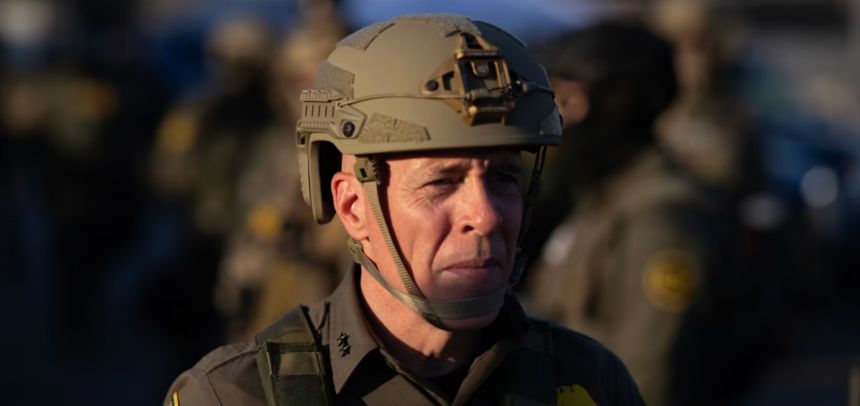
A year ago, few Americans knew the name Gregory Bovino. Now the mid-fifties Border Patrol commander-at-large has become the public face of the Trump administration’s aggressive immigration enforcement, drawing attention for both his tactics in the field and his distinctive style.
Bovino has been visible on the streets of cities across the United States, including Minneapolis, Chicago, Charlotte, and New Orleans, often leading patrols, deploying tear gas, and confronting critics. His social media presence amplifies his role, with videos and photos highlighting the Border Patrol’s operations and his team’s so-called “Mean Green Team” approach to arrests.
The Minneapolis spotlight came after a Border Patrol officer shot and killed a man on Saturday. Bovino defended the officers’ actions, telling reporters that the man was armed and “wanted to do maximum damage and massacre law enforcement.” The comments drew swift criticism, with videos circulating online that appeared to contradict his account. Democratic Senator Chris Murphy called the statements misleading and accused the Trump administration of presenting false narratives to the public.
Bovino has consistently defended his officers’ tactics. He uses the phrase “turn and burn” to describe rapid and aggressive operations intended to prevent protests from escalating and reduce risks to agents. Supporters praise him for enforcing the administration’s immigration policies, but local leaders and protesters argue his approach is authoritarian, particularly in Democrat-led cities. Illinois Governor JB Pritzker accused Bovino and other federal officials of creating “war zones” to justify deploying additional forces.
Bovino’s methods have sparked legal challenges and criticism from judges. In Chicago, a federal court found his account of a protest-related incident contradicted by video evidence. Despite scrutiny, he has defended his officers, arguing that public criticism often comes from people “who don’t walk a mile in the shoes of law enforcement.”
His public image extends beyond tactics. Bovino has been noted for wearing a long green Border Patrol trench coat, which has drawn comparisons to authoritarian uniforms. He has stated the coat is standard issue and has been in his possession for more than 25 years.
Originally from North Carolina, Bovino joined the Border Patrol in 1996, serving in Southern California, New Orleans, and foreign postings in Honduras and Africa. His high-profile operations began last summer with the arrests of more than 5,000 immigrants in Los Angeles, cementing his national prominence.
The debate around Bovino underscores the tension between federal immigration enforcement and local communities. While senior Homeland Security officials praise his work, critics argue that aggressive tactics and public statements risk inflaming conflicts and undermining trust in law enforcement.
Despite scrutiny, Bovino continues to appear publicly and on social media, projecting a message of relentless enforcement. In a recent briefing, he described his mission in Minneapolis: “There is a number, and it’s called all of them,” referring to the individuals his team seeks to apprehend.