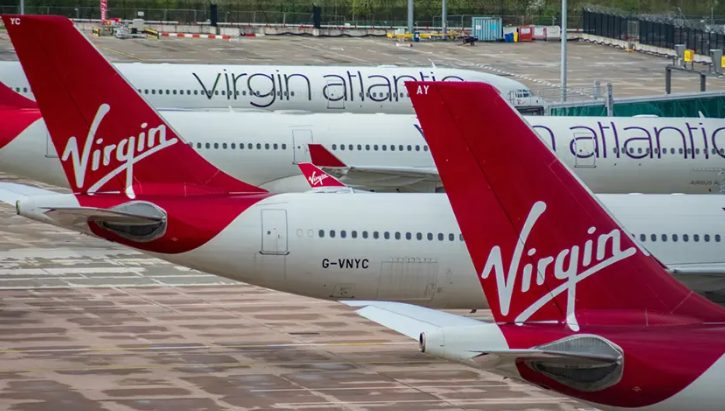
Virgin Atlantic has warned that escalating conflict involving Iran and the resulting closure risks around the Strait of Hormuz have “upended” its strategic and financial planning through the end of the decade, as rising fuel costs and weakening travel demand weigh heavily on the long-haul carrier.
The airline, co-owned by Sir Richard Branson and Delta Air Lines, had already returned to losses before the latest Middle East disruption intensified pressure on the aviation sector. Newly filed accounts at Companies House show Virgin Atlantic recorded a pre-tax loss of £127 million in 2025, reversing a £20 million profit the previous year and extending a broader downturn that included combined losses of £326 million across 2022 and 2023.
Management attributed part of the strain to US economic policies under President Donald Trump, including tariffs that have unsettled global trade flows and affected consumer confidence on transatlantic routes. The situation worsened after military action involving Iran and subsequent disruption to key oil shipping lanes pushed jet fuel prices sharply higher.
The airline said it typically hedges around half of its fuel requirements one year in advance, leaving it more exposed to sudden price spikes than some competitors. British Airways parent company IAG, by comparison, has locked in around 70% of its expected fuel needs for 2026. Industry data shows jet kerosene prices have nearly doubled since the onset of the conflict, with US carriers reporting fuel cost increases of more than 50% in the aftermath.
In remarks accompanying the financial results, outgoing chairman Peter Norris described the operating environment as highly volatile and said geopolitical shocks were having immediate effects on both costs and passenger demand. He noted that weaker-than-expected US bookings following earlier tariff changes had already reduced profitability before the Middle East crisis escalated.
Norris added that planning assumptions made only months earlier had been significantly disrupted, making reliable forecasting through the rest of the decade extremely difficult. He said sustained pressure on fuel supply chains and weakening consumer confidence could continue to weigh on long-haul travel markets.
The airline has already reworked its route planning for the remainder of the year in response to changing conditions. Analysts warn that broader economic pressures, including slower UK growth and tighter household spending, are adding to the strain across the aviation sector.
Leadership changes have also coincided with the financial update. Norris has stepped down as chair after 14 years, succeeded by Virgin Group chief executive Josh Bayliss. Former chief executive Shai Weiss departed earlier this year and has been replaced by Corneel Koster, who previously served as Virgin Atlantic’s chief customer officer.
With fuel costs elevated and demand recovery uncertain, Virgin Atlantic faces a more challenging operating landscape than it had anticipated just a year ago, forcing the airline to reassess its long-term strategy in an increasingly unpredictable global environment.