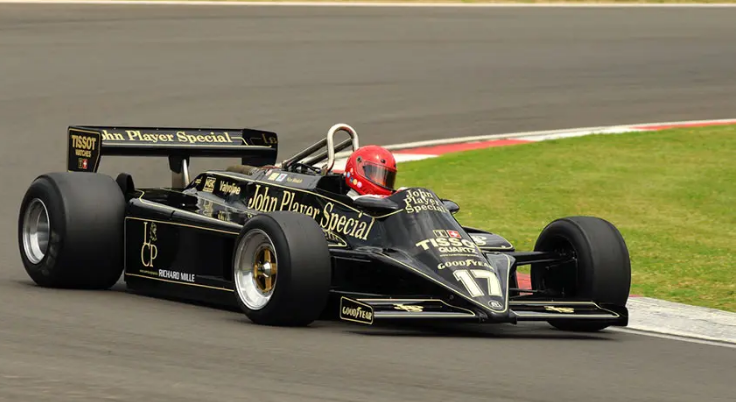
As thousands of fans gather at the British Grand Prix, the sight of classic Formula One cars in iconic colours has revived memories of an era when some of the world’s biggest companies dominated the sport. While many legendary teams remain part of Formula One in new forms, a large number of the corporate sponsors that once covered their cars have disappeared through mergers, acquisitions, regulation or business failure.
Historic demonstration runs at Silverstone feature famous liveries including the blue-and-gold Rothmans Williams, the yellow Benson & Hedges Jordan, the Elf-sponsored Tyrrell and the Marlboro-branded McLaren. These colours defined Formula One during the 1980s and 1990s, when sponsorship from tobacco companies and major technology firms played a central role in financing teams.
Tobacco companies were among the sport’s biggest financial backers before advertising restrictions gradually removed their presence from motorsport. Rothmans became the title sponsor of Williams in 1994, helping fund championship-winning campaigns with Damon Hill and Jacques Villeneuve. The company later disappeared as an independent business after its acquisition by British American Tobacco in 1999.
Jordan Grand Prix’s bright yellow Benson & Hedges branding became one of the sport’s most recognisable designs after the partnership began in 1996. Its parent company, Gallaher, remained in Formula One until tobacco sponsorship bans took effect before being acquired by Japan Tobacco in 2007.
Camel also withdrew from Formula One as advertising restrictions expanded across Europe, while Marlboro maintained a longer association with Ferrari through indirect branding arrangements after traditional cigarette advertising was prohibited.
Technology companies that once appeared on Formula One cars faced a different challenge as rapid changes reshaped the industry. Sega sponsored Williams during one of its most successful periods in the early 1990s but withdrew after leaving the video game console market in 2001. Computer manufacturer Compaq became a major Williams sponsor before being acquired by Hewlett-Packard in 2002, with the team’s branding changing during the racing season.
The telecommunications boom also reached Formula One during the early 2000s. Mobile operator Orange partnered with Arrows before the financially troubled team folded in 2002. Orange itself later became the primary brand of France Télécom after the company chose to rename its business.
Not every sponsor disappeared. Canon remains a global imaging company, while Elf continues as part of TotalEnergies, which still maintains links with motorsport. Several famous teams have also survived through ownership changes. Jordan eventually evolved into Aston Martin, while Tyrrell’s former entry became the foundation for today’s Mercedes Formula One team.
Formula One has grown into a global commercial powerhouse, attracting record crowds and worldwide audiences. Yet the changing names displayed on racing cars over the decades reflect shifting business trends, with sponsorship moving from tobacco and consumer electronics to technology firms, logistics companies and financial services.
The historic cars on display at Silverstone offer more than nostalgia for racing fans. They also serve as a reminder that while Formula One has continued to thrive, many of the companies that once defined its appearance have become part of business history.