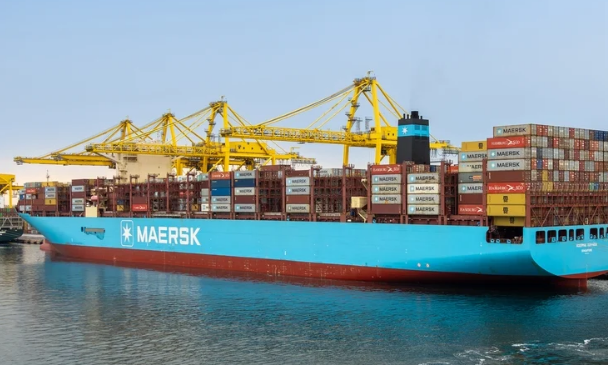
Danish shipping giant Maersk has raised its full-year earnings forecast for the second time this year after reporting a stronger-than-expected operating profit for the second quarter.
The company said earnings before interest, taxes, depreciation and amortisation (EBITDA) reached $3 billion between April and June, well above the $2.12 billion median estimate from a poll of 11 analysts. The figure also represented an increase from $2.3 billion recorded during the same period last year.
Maersk shares rose about 6 percent following the results as investors responded positively to the stronger performance and improved outlook.
The company is closely watched as an indicator of global trade because it is the world’s second-largest container shipping operator. Strong demand, particularly from Asia, has supported its recent performance and encouraged Maersk to increase its expectations for container market growth.
In June, the company raised its outlook and forecast global container demand would expand by around 4 percent this year. The latest earnings report has prompted another improvement in its full-year guidance.
Maersk has benefited from disruption across major international shipping routes, which has contributed to higher freight rates. The conflict involving the United States and Iran has disrupted traffic around the Strait of Hormuz, while attacks by Yemen’s Houthi movement have affected shipping through the Red Sea.
The security situation in the Red Sea has forced many shipping companies to avoid the Suez Canal, one of the world’s most important trade routes connecting Asia and Europe. Instead, vessels have been travelling around Africa’s Cape of Good Hope.
The longer journeys have increased fuel consumption, transit times and operating costs, while reduced shipping capacity on some routes has contributed to higher freight prices.
However, some analysts have warned that Maersk’s recent gains could be partly driven by temporary disruptions rather than a lasting improvement in the shipping market. A return to more normal conditions in the Red Sea could increase available capacity and put considerable pressure on freight rates.
The Asia-Europe route has been particularly affected. Most major shipping companies abandoned the Suez Canal route earlier this decade after repeated attacks in the Red Sea, choosing the longer journey around Africa to protect vessels and crews.
Maersk and German shipping company Hapag-Lloyd have recently announced plans to resume some services through the Suez Canal as security conditions gradually improve. A wider return to the route could shorten journeys and reduce costs for carriers.
For now, Maersk’s stronger-than-expected results indicate that elevated freight rates and resilient demand continue to support the shipping industry, although investors remain focused on how long those conditions can last.