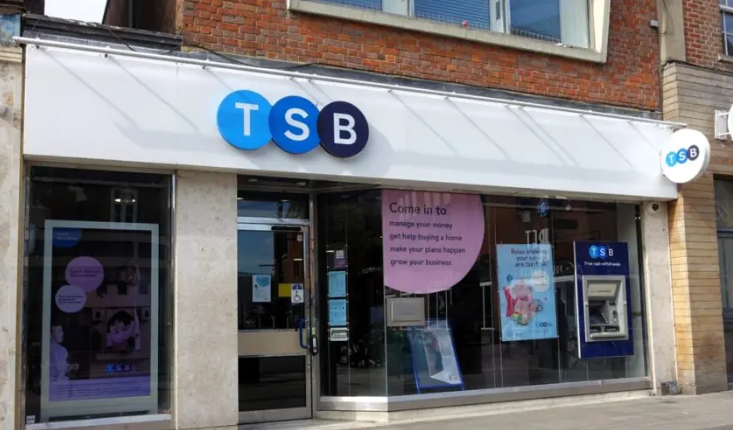
TSB is to require its roughly 5,000 employees to work from an office three days a week from April 2027, prompting its main staff union to prepare potential Employment Tribunal cases over the changes.
The new requirement follows Santander’s £2.65 billion takeover of TSB, completed in April. Santander is now working to align the two banks’ operations, policies and workforce arrangements, although TSB continues to operate as a separate business.
TSB previously had no formal policy specifying how many days employees had to spend in the office. The new arrangement is expected to significantly change working patterns for staff who have become accustomed to greater flexibility since the Covid-19 pandemic.
The TBU union said some employees could struggle to meet the requirement because of personal or medical circumstances. Staff representatives are preparing to challenge individual cases through the Employment Tribunal if suitable arrangements cannot be agreed.
In an internal newsletter, the union said a significant number of employees had medical or personal reasons behind their existing working arrangements. It said “all roads are going to lead back to employment law” and that it was “prepared to fight cases at the Employment Tribunal”.
A source close to TSB said discussions had begun between management and employees to establish possible exceptions for workers whose health or personal circumstances require greater flexibility.
No comment was provided by TSB, Santander or the TBU.
Government guidance on flexible working states that employees cannot normally bring a tribunal claim simply because an employer has refused a flexible working request. A claim can be made where an employer has failed to deal with a request reasonably or has not followed the required process. Such complaints generally must be brought within three months of the employer’s decision, with compensation capped at eight weeks’ pay.
The dispute adds to growing tensions in the banking sector over office attendance as employers seek to increase workplace presence after years of widespread remote and hybrid working.
Santander tightened its own hybrid working rules in September 2024, requiring about 10,000 UK office-based employees to spend the equivalent of three days each week at company sites, up from two days.
TSB has also announced plans for 130 redundancies as part of the integration following Santander’s takeover. Mahesh Aditya, chief risk officer of Banco Santander, took charge of Santander UK in March to oversee the integration process.
The merger comes as Santander manages other challenges in the UK, including the fallout from the motor finance mis-selling scandal.
TSB has previously faced criticism over technical problems linked to earlier attempts to overhaul its IT systems. A platform migration under former owner Sabadell caused widespread disruption for customers and affected banking services for months.
TSB, originally known as Trustee Savings Bank, was established in 1810. Its brand was retained after its merger with Lloyds Bank in 1995 before Spain’s Sabadell bought the lender in 2015. Santander subsequently agreed to acquire TSB as part of its expansion in the UK banking market.