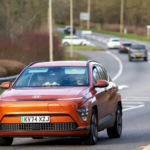
The UK’s electric vehicle (EV) market recorded its weakest growth in almost two years in November, as uncertainty over the government’s upcoming pay-per-mile tax weighed on buyers. The Society of Motor Manufacturers and Traders (SMMT) reported that just under 40,000 battery-electric vehicles (BEVs) were registered last month, representing a 3.6% increase on November 2024, a sharp slowdown for a sector expected to accelerate as part of the country’s net-zero ambitions.
The figures mark the softest year-on-year growth since late 2023, when supply chain issues had disrupted the market. BEVs now hold a 26.4% share of new car registrations, falling short of the government’s 28% target for this stage of the transition.
The slowdown comes ahead of the introduction of the new EV excise duty (eVED), confirmed by Treasury officials earlier this month. From April 2028, BEV drivers will pay 3p per mile, while plug-in hybrid drivers will be charged 1.5p per mile. For an average BEV driver covering 8,500 miles annually, the tax would amount to £255, a notable increase from the current near-zero cost of running an electric car.
The SMMT warned that the new tax could undermine the UK’s net-zero strategy. The Office for Budget Responsibility estimates the measure may result in 440,000 fewer EV sales over the next five years. SMMT chief executive Mike Hawes said, “This should be a wake-up call. We cannot take sustained EV growth for granted. We should be encouraging drivers to switch, not punishing them for doing so.”
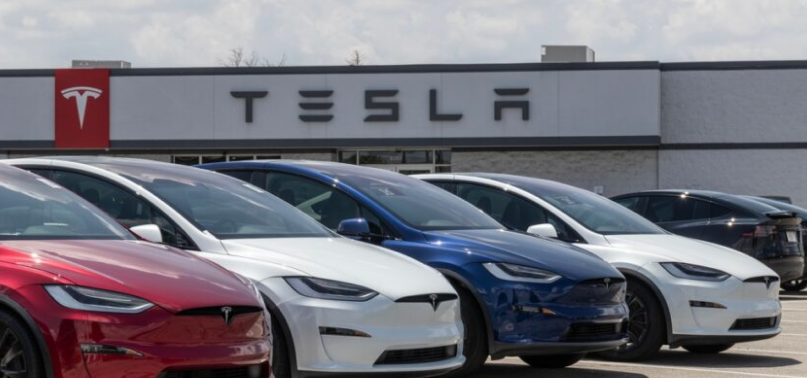
Tesla appeared to be the sector’s biggest casualty last month, with UK registrations dropping almost 20% to 3,800 vehicles, reducing its market share to 2.5%. In contrast, Chinese manufacturer BYD, which focuses heavily on hybrids and plug-in hybrids, more than tripled its UK sales during the same period.
The data also reflects a broader shift in consumer preferences. Plug-in hybrids were the fastest-growing segment in November, up 14.8%, while traditional petrol and diesel vehicles continued their long-term decline.
Despite the looming mileage tax, the government extended EV purchase grants until 2030, with select Renault and Mini models now eligible for the maximum £3,750 discount. Analysts say these measures may not fully offset buyer concerns about rising running costs. Jamie Hamilton, automotive partner at Deloitte, noted, “The new mileage charge will increase the running costs of EVs and may slow uptake. The industry must now redouble efforts to communicate the long-term value and investment behind the transition.”
With global automakers investing billions in electrification and the UK’s zero-emission vehicle mandate gaining traction, ministers hope November’s slowdown is temporary rather than the start of a steeper decline in EV adoption.