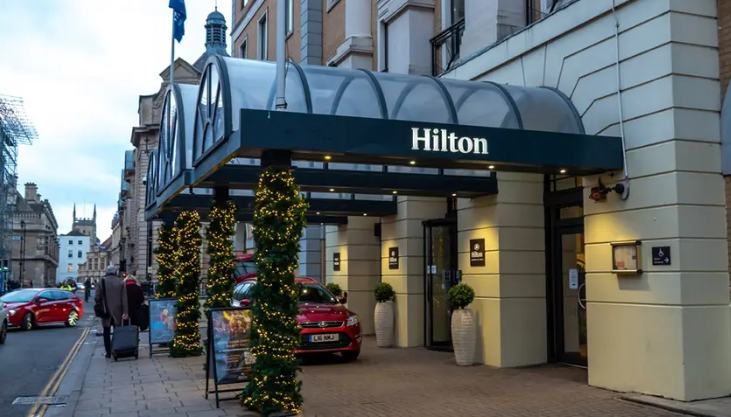
The UK’s competition authority has opened a formal investigation into three of the world’s largest hotel groups, Hilton, InterContinental Hotels Group (IHG), and Marriott International, over concerns that they may have shared “competitively sensitive” information through a third-party data platform.
The Competition and Markets Authority (CMA) said it is examining whether the hotel operators exchanged commercially sensitive data using STR, a widely used industry benchmarking tool owned by CoStar Group. Together, the three chains operate more than 25,000 hotels globally, giving the probe significant weight in the international hospitality sector.
Hotels routinely use analytics platforms like STR to track metrics such as occupancy rates, average daily room prices, and revenue per available room (RevPAR). These tools help operators adjust pricing in response to market demand and competitor activity. However, the CMA warned that sharing sensitive information, even indirectly through a third-party provider, could reduce uncertainty between rivals and risk softening competition.
“When rival businesses share competitively sensitive information, including through a third-party data analytics provider, it reduces the uncertainty competing businesses normally have about how each other will act,” the regulator said. “This can affect how strongly companies compete because it makes it easier for them to predict what each other will do and coordinate their behaviour.”
The CMA plans to spend up to six months gathering evidence before deciding whether to issue a formal statement of objections. The regulator stressed that no conclusions have been reached and no assumptions should be made about whether competition law has been breached.
The announcement affected share prices early on Monday. IHG fell as much as 5 per cent in London trading, while Hilton and Marriott dropped around 3 per cent in the US. CoStar, valued at more than $18 billion, declined about 2 per cent.
IHG and Hilton confirmed they are cooperating fully with the investigation. CoStar said it was surprised by the CMA’s interest in what it described as a “longstanding hotel data analytics and benchmarking platform” used by companies and government bodies for decades. Marriott did not immediately respond to requests for comment.
If the CMA concludes that competition rules have been broken, it can impose fines of up to 10 per cent of a company’s global annual turnover. Companies that report cartel activity early and cooperate with investigations may receive immunity or reduced penalties.
The probe is part of the CMA’s wider focus on how digital tools and algorithms are used in pricing decisions across industries. The watchdog has increasingly scrutinized algorithmic pricing systems, warning that while they can improve efficiency, they must not facilitate anti-competitive coordination.
Recent cases highlight the growing regulatory concern over data-sharing. Last year, seven major UK housebuilders agreed to contribute £100 million to affordable housing initiatives after the CMA found evidence of information sharing that may have affected competition. In November, the regulator opened investigations into eight companies over online pricing practices.
For the hotel sector, the outcome could reshape how pricing data is shared, analysed, and applied, potentially affecting industry practices worldwide.