Stellantis, the European automotive group behind Vauxhall, Citroën, Fiat, and Jeep, has announced a €22 billion charge after admitting it overestimated the pace of electric vehicle adoption and is scaling back its push toward an all-electric future. The strategic reversal will see billions in future losses, write-offs, and cancellation costs related to EV models that will no longer be launched. Around €6.5 billion of the charge will involve cash leaving the business.
The announcement sent Stellantis shares tumbling, briefly halting trading before the stock plunged more than 20 per cent. By mid-morning in London, shares were down 21 per cent at €6.40, marking a five-year low. The company also confirmed it would cancel its dividend.
Stellantis said its revised strategy will now be guided by “demand, not command,” shifting away from regulatory-driven electrification targets toward models aligned with customer preferences. The move aligns with trends in the US market under President Donald Trump, where carmakers are pivoting back to petrol and hybrid engines.
The company, formed from the mergers of Peugeot-Citroën, Fiat-Chrysler, and Opel-Vauxhall, has faced internal strategic tensions in recent years, culminating in the departure of former chief executive Carlos Tavares 15 months ago. His successor, Antonio Filosa, said the EV misstep had cost Stellantis touch with real-world customer needs.
“The charges announced today largely reflect the cost of over-estimating the pace of the energy transition,” Filosa said. “That miscalculation distanced us from many car buyers’ needs, means and preferences, and was compounded by poor operational execution.”
As part of the reset, Stellantis will invest $13 billion over the next four years to expand production in the United States, creating more than 5,000 jobs and improving capacity utilisation at American plants. Iconic petrol models will return, including the HEMI V8 engine for the Ram 1500 pick-up and the Jeep Cherokee, a gasoline bestseller discontinued three years ago.
The company also cancelled the Ram 1500 REV, an all-electric pick-up slated for launch later this year, citing the need to align products with customer demand and evolving US regulations.
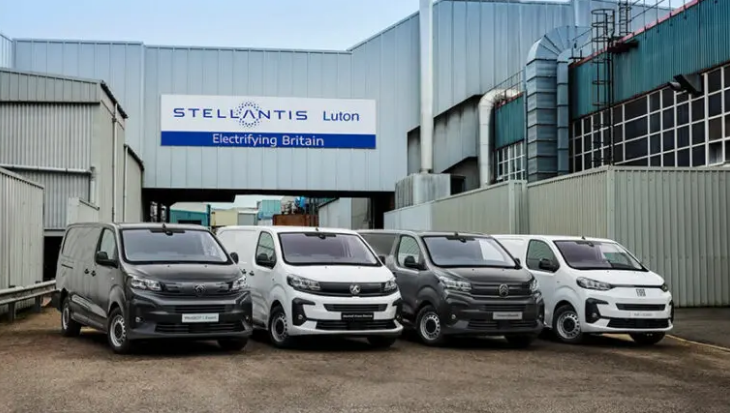
Stellantis said it will give greater autonomy to regional teams, allowing decisions to reflect local market knowledge rather than centralised mandates. While its UK manufacturing footprint has contracted, limited electric van production will continue at Ellesmere Port under the Vauxhall brand.
The move follows similar retreats by Ford and General Motors, highlighting a broader reassessment by western carmakers as EV demand slows and political support for rapid electrification wanes. Stellantis will release its full-year 2025 results on 26 February.