India’s exports to the United States have fallen sharply in recent months following the imposition of steep American tariffs, triggering one of the most significant trade disruptions between the two nations in years.
According to official data, Indian goods exports to the US — the country’s largest trading partner — dropped 20% in September alone and nearly 40% over the past four months. The decline follows Washington’s decision to impose 50% import duties on Indian products, including an additional 25% penalty linked to New Delhi’s continued purchases of Russian oil.
“The US has become India’s most severely affected market since the tariff escalation began,” said Ajay Srivastava, co-founder of the Global Trade Research Initiative (GTRI), a Delhi-based think tank.
The tariffs, which came into full effect on August 27, have hit India’s labour-intensive export sectors the hardest. Industries such as textiles, gems and jewellery, engineering goods, and chemicals — key contributors to foreign exchange and major employers — have all reported steep declines in shipments.
Data from GTRI shows exports to the US have dropped for four consecutive months, falling from $8.8 billion in May to $5.5 billion in September — a 37.5% contraction. The decline has contributed to India’s merchandise trade deficit widening to a 13-month high of $32.15 billion last month.
While some of the losses have been partially offset by stronger exports to the United Arab Emirates and China, the US market slump has significantly strained India’s trade balance.
The tariff measures, introduced by the Trump administration, are intended to penalise India over its energy ties with Russia and to push for greater access for US agricultural and manufacturing exports. Washington argues that India’s continued purchase of discounted Russian crude oil undermines global sanctions on Moscow over the war in Ukraine.
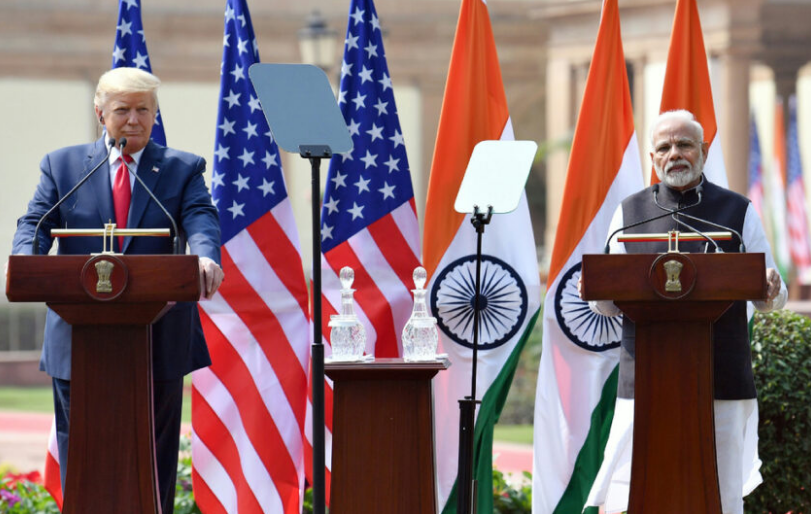
President Donald Trump said earlier this week that Prime Minister Narendra Modi had agreed to “phase out” Russian oil imports during “constructive energy cooperation talks.” However, India’s Ministry of External Affairs maintained that discussions with Washington were “ongoing,” noting that the US had expressed interest in deepening overall energy cooperation.
Trade talks between the two countries have resumed after months of stalemate, with an Indian delegation currently in Washington seeking to secure relief measures to mitigate the tariffs’ impact. Both sides are aiming for a resolution before the end of November, though officials acknowledge significant differences remain — particularly regarding access to India’s tightly protected agricultural and dairy sectors.
Until the recent trade tensions, the US was India’s largest trading partner, with bilateral trade valued at around $190 billion in 2024. Both nations had set an ambitious goal to double that figure to $500 billion, but analysts warn that the escalating dispute could derail that target.
“The timing is unfortunate — global demand is already weakening, and India’s export engines were just beginning to recover,” said Priya Nair, a trade economist based in Mumbai. “If these tariffs persist, they could cause lasting damage to India’s most employment-intensive industries.”
Observers say the coming weeks will be crucial in determining whether Washington and New Delhi can bridge their differences — or if the world’s two largest democracies are headed for a prolonged trade rift.