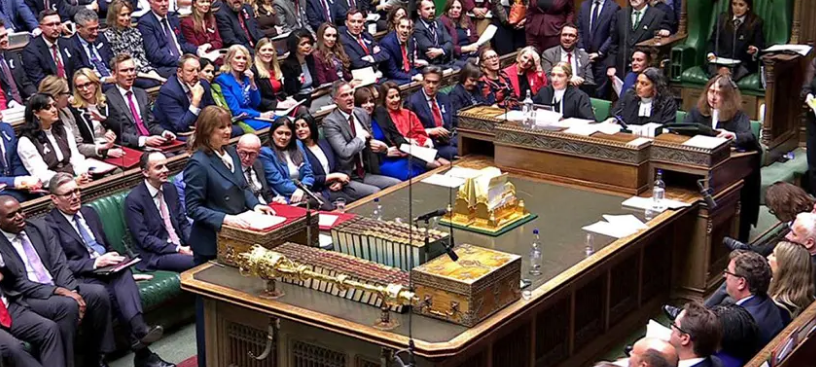
Chancellor Rachel Reeves has criticised the accidental early publication of the Office for Budget Responsibility (OBR) report, calling the incident “deeply disappointing” as it appeared online before her Budget statement.
Speaking in the House of Commons, Reeves said the OBR had accepted full responsibility for the error. She used the session to highlight the government’s economic achievements over the past 16 months, pointing to new trade agreements and changes to fiscal rules as evidence of progress in “rebuilding the economy.”
The OBR, an independent body, works closely with the Treasury to produce economic forecasts that are used to assess whether the government is meeting its self-imposed fiscal targets. The early release raised immediate concern among business leaders and cybersecurity experts, who warned of potential market risks.
Kenny MacAulay, CEO of accounting software firm Acting Office, described the incident as a “staggering” breakdown in protocol. “It’s truly astonishing that such a market-sensitive document could find its way online via official channels in advance of the Chancellor’s speech,” he said. “Basic compliance requirements should be in place to prevent this from happening. A complete review is required to understand how and why such a major breach occurred.”
Cybersecurity specialists echoed concerns about the government’s document management. Graeme Stewart, head of public sector at Check Point, said the early release exposed serious vulnerabilities. “Accidentally publishing a market-sensitive report online before the Chancellor has even delivered her statement is a major security breach that warrants a full investigation,” he said. “Sloppy document management presents clear risks. Leaks like this could be exploited by hackers or fraudsters to manipulate the markets. There are no excuses, and the government needs to rethink its entire publication strategy.”
At present, the Treasury has not confirmed whether a formal review will be conducted, but senior officials are expected to face questions in the coming days over how the error occurred and what steps will be taken to prevent similar incidents in the future.
The early publication has drawn attention to the handling of sensitive economic data in government channels and highlights the challenges of safeguarding information that could influence financial markets. Officials are under pressure to reassure businesses and investors that procedures will be strengthened to avoid such breaches.
Reeves’ comments underline the importance the government places on careful management of economic forecasts and public communications, while signalling that accountability and corrective measures will be expected from both the OBR and Treasury staff involved in the incident.