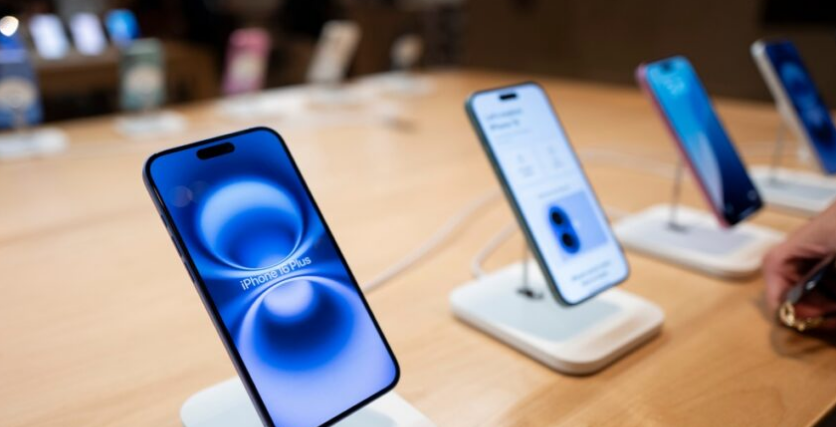
Apple has formally appealed a landmark €500 million fine imposed by the European Commission, deepening a legal and regulatory standoff between the U.S. tech giant and Brussels over digital market rules.
The penalty, announced earlier this year, was levied after EU regulators found that Apple had breached the bloc’s new Digital Markets Act (DMA) by unfairly limiting how app developers could inform users about cheaper options outside the App Store. The ruling focused on Apple’s long-standing “anti-steering” policy, which prohibited apps from directing users to external platforms or payment systems — a practice the Commission said undermined fair competition.
In its appeal, filed with the General Court of the European Union, Apple accused the Commission of overstepping its legal authority. “The Commission’s decision and unprecedented fine go far beyond what the law requires,” Apple said in a statement on Monday. “As our appeal will show, the EC is mandating how we run our store and forcing business terms that are confusing for developers and bad for users.”
The core dispute centres on the interpretation of “steering” under the DMA. While Apple previously modified its policies to allow limited linking to external websites, Brussels insisted developers must also be allowed to promote third-party offers directly within their apps — a requirement Apple argues is not explicitly stated in the legislation.
To comply with the DMA and avoid daily fines of up to €50 million, Apple had already introduced new fee structures and terms for developers operating in the EU. These changes, the company said, were made “under threat” and are now being challenged in court.
The Commission, however, maintains that Apple’s practices stifled innovation and competition. EU officials have framed the DMA as a critical tool to rebalance digital markets and reduce the gatekeeping power of major platforms. Apple, along with other tech giants such as Meta and Google, has been designated a “gatekeeper” under the new law, triggering stricter obligations.
The case has further strained EU-U.S. relations on tech regulation. Former U.S. trade adviser Peter Navarro called the EU’s actions “lawfare” against American firms, while some in Washington have accused Brussels of using regulation as a non-tariff barrier.
Despite political pressures, the European Commission has stood by its position. “We will defend our decision in court,” a spokesperson said.
Legal experts expect a lengthy battle. “Apple fundamentally hates being forced to change how it operates its App Store,” said Tom Smith, a former legal director at the UK’s Competition and Markets Authority. “It’s worth spending millions on legal fees to delay opening up a market worth billions.”
The General Court’s ruling could have sweeping implications for the future of digital regulation in Europe and set a precedent for how Big Tech companies are held accountable under the DMA.