Amazon is making another attempt to break into Britain’s competitive grocery sector by converting its closed Fresh convenience stores into Whole Foods Market outlets, the organic chain it bought for $13.7 billion in 2017. The move comes six months after Amazon closed 19 Fresh stores across the country, ending its 2021 experiment with a till-free, “grab and go” concept that failed to gain traction with British shoppers.
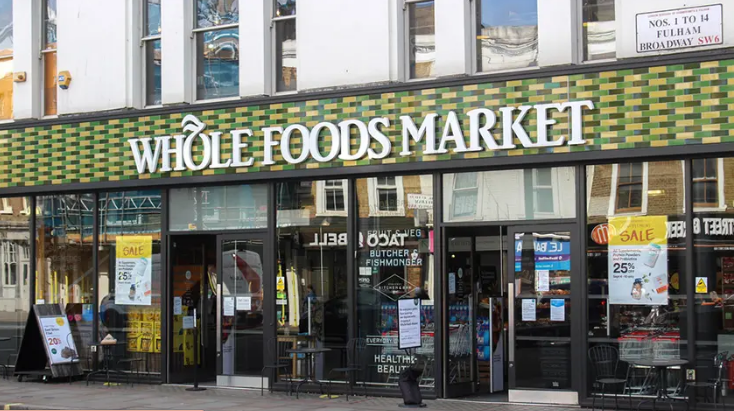
Whole Foods currently operates seven stores in London and plans to open five more by the end of June. Four of these new outlets will occupy former Fresh locations, including sites in Angel, Islington; Wood Wharf, Canary Wharf; Gracechurch Street, the City; and Liverpool Street, with Notting Hill Gate and St James’s also earmarked for openings. The new Angel store, which spans 3,600 square feet, offers a hot food counter, self-serve coffee, and an Amazon kiosk, with Deliveroo delivery set to follow.
Jade Hoai, executive leader of purchasing at Whole Foods Market UK, said the expansion reflects confidence in the brand’s appeal in neighbourhoods where customers shop frequently and seek high-quality food. “We’re seeing a clear shift in consumer behaviour towards quality, transparency and a more considered retail experience,” she said.
Despite Amazon’s optimism, Whole Foods has faced persistent challenges in the UK. Turnover at its UK operation fell seven per cent to £86.4 million in the year to December 2024, while pre-tax losses hit £20 million. Cumulative losses have now exceeded £200 million. The company closed two underperforming stores and its Dartford distribution centre in early 2024, reducing its workforce from 798 to 608 employees. High operating costs, premium pricing, and fierce competition from discounters such as Aldi and Lidl, as well as established chains including Tesco and Sainsbury’s, have consistently limited the chain’s growth.
The situation contrasts sharply with Whole Foods in the United States, where the brand has grown under Amazon’s management by cutting prices and opening smaller-format stores. The strategy has helped shake off the “Whole Paycheque” reputation, which referred to the high cost of groceries at the chain.
For Amazon, the expansion of Whole Foods is part of a broader effort to strengthen its presence in physical retail and drive engagement with its Prime subscription service. The move will test whether strategies that succeeded in the US can translate to the UK, where consumer habits and competition are markedly different.
The repurposing of Fresh stores signals Amazon’s continued ambition in British grocery retail, but past losses and challenging market conditions mean the company faces a steep climb to turn Whole Foods into a profitable operation in the UK.