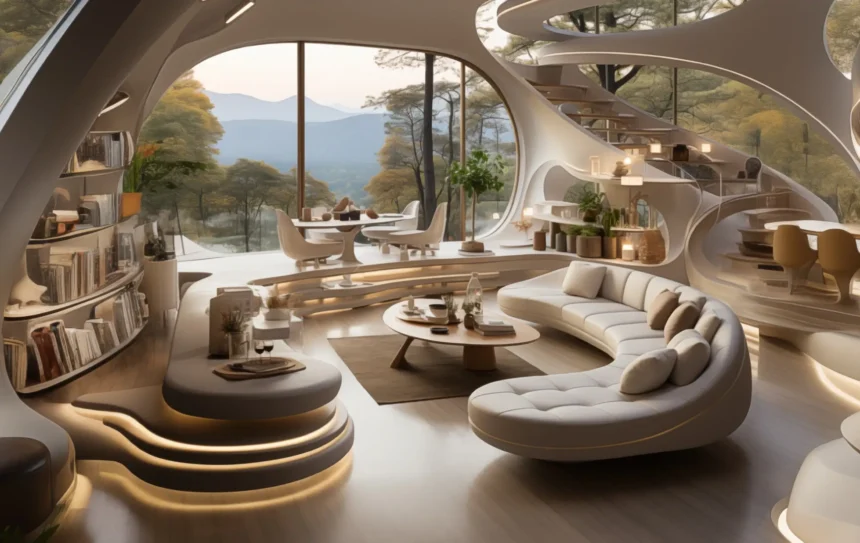
For decades, the bridge between a designer’s vision and a client’s reality was paved with 2D floor plans, hand-drawn sketches, and a significant amount of “blind faith.” If a homeowner couldn’t mentally translate a flat blueprint into a lived-in space, the results often led to expensive modifications or, worse, a home that felt “off.” Today, that gap has been permanently closed. We have entered an era where spatial visualization is no longer a luxury for elite architectural firms but a standard tool for anyone looking to optimize their living environment.
From Blueprints to Living Breathing Spaces
The fundamental shift in modern design is the move from representation to simulation. In a traditional 2D plan, you see where the walls are. In a 3D model, you see how the afternoon sun hits the oak flooring and whether the shadow from the kitchen island makes the room feel too small. This “God-mode” perspective allows for a level of scrutiny that was previously impossible.
Why 3D Visualization is a Game Changer:
True-to-Scale Accuracy: It eliminates the “will it fit?” anxiety. You can test a king-sized bed in a guest room and instantly see if there is enough clearance for the wardrobe doors to open.
Material Experimentation: You can swap marble for quartz or navy blue for sage green with a single click, seeing the atmospheric impact immediately rather than waiting for the paint to dry.
Lighting Logic: Advanced software can simulate geographical coordinates to show exactly how natural light will enter the room at different times of the year.
Emotional Buy-in: Seeing a photorealistic render of a finished room creates an emotional connection that a black-and-white line drawing simply cannot evoke.
The Democratization of Design Tools
Perhaps the most exciting development is that these high-end capabilities are no longer locked behind proprietary, difficult-to-learn software. The barrier to entry has crumbled. Today, homeowners can take charge of their own renovations by using intuitive web-based platforms. Accessing high-quality 3d for interior design tools allows a user to become the architect of their own sanctuary, experimenting with layouts and styles in a risk-free virtual sandbox.
The Strategic Benefits for Professionals and Hobbyists
Whether you are a professional decorator or a DIY enthusiast, the strategic advantages of working in three dimensions are undeniable. It transforms the design process from a series of guesses into a series of calculated, creative decisions.
1. Cost Mitigation and Waste Reduction
One of the most expensive phrases in renovation is “I didn’t think it would look like that.” 3D modeling acts as a digital safety net. By identifying that a specific sofa blocks a walkway or that a dark ceiling makes a room feel claustrophobic before any money is spent, you save thousands in potential “correction” costs.
2. Enhanced Communication
Design is a collaborative process. When everyone—from the homeowner to the contractor—can look at the same 3D model, the margin for misinterpretation vanishes. It ensures that the plumber knows exactly where the vanity goes and the electrician understands the placement of the recessed lighting.
3. Sustainability through Precision
By knowing exactly how much material is needed (flooring, paint, wallpaper), you reduce over-ordering and waste. Precision in the planning phase is the first step toward a more sustainable construction process.
Future Horizons: AI and Augmented Reality
We are standing on the edge of the next great leap. The integration of Artificial Intelligence means that software can now suggest furniture arrangements based on the flow of traffic or recommend color palettes based on the psychological mood you wish to achieve. Furthermore, Augmented Reality (AR) is allowing users to “place” virtual furniture in their actual physical rooms using just a smartphone camera.
Trends to Watch:
Virtual Walkthroughs: The ability to “walk” through your future home using a VR headset to check ceiling heights and sightlines.
Hyper-Personalization: Using 3D printing to create custom furniture that fits the exact dimensions of your virtual model.
Real-Time Rendering: The ability to change lighting and textures instantly while “inside” the virtual room.
Designing for the Human Experience
Ultimately, the rise of 3D technology in interior design is about more than just fancy graphics; it is about the human experience. It is about ensuring that our most intimate spaces are perfectly tailored to our lifestyles, our bodies, and our peace of mind. By taking the guesswork out of the equation, we free up more space for what truly matters: creativity, comfort, and the joy of creating a home that feels exactly right.