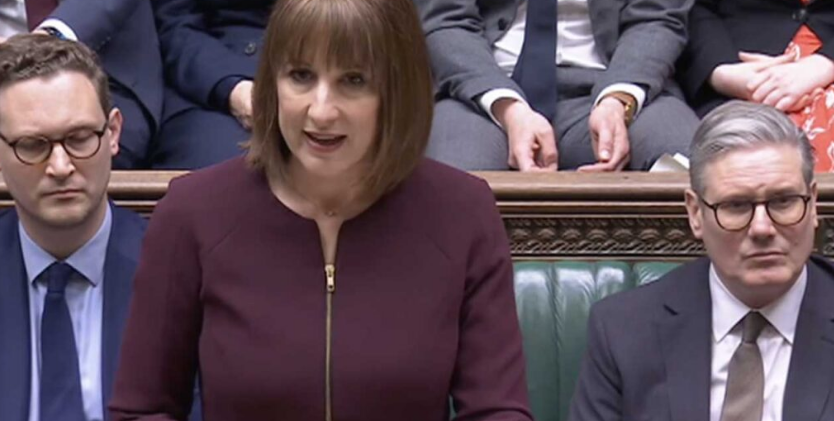
The UK economy shrank by 0.1% in May, marking the second consecutive monthly decline and raising concerns about the country’s fragile recovery. The latest figures, released by the Office for National Statistics (ONS) on Friday, come as a blow to newly appointed Chancellor Rachel Reeves, who has pledged to stabilise and grow the economy.
The contraction follows a sharper 0.3% fall in April and falls short of analysts’ expectations for modest growth. The decline in May was led by a 0.9% drop in industrial production and a 0.6% fall in construction output. While the services sector — which accounts for the majority of economic activity — grew by a marginal 0.1%, it was not enough to offset declines elsewhere.
Despite some growth across all major sectors over the three months to May, the month-on-month figures paint a worrying picture. According to the ONS:
Services output rose by 0.1% in May after a 0.3% fall in April.
Production output, including manufacturing and energy, fell 0.9% — extending April’s 0.6% decline.
Construction output dropped 0.6% in May, reversing the gains seen the previous month.
The sluggish data adds pressure on the Labour government, which entered office on promises of restoring economic confidence and delivering growth. Chancellor Reeves recently outlined her plan for “stability and growth” built on new fiscal rules and a pro-business strategy, but economists say more targeted measures may be needed to revive momentum.
Ben Jones, lead economist at the Confederation of British Industry (CBI), said the latest figures show the headwinds businesses still face. “Flatlining growth in May underscores the ongoing pressures on the economy, with manufacturing and retail continuing to struggle,” he said. “Persistent trade uncertainty, a cooling labour market, and slowing income growth all point to a sluggish recovery.”
Jones called on the government to avoid raising taxes on businesses and instead focus on removing barriers to investment. “A strong, collaborative partnership between business and government is essential to achieve meaningful, sustained recovery,” he added.
The UK economy also faces external challenges. Global growth forecasts have been revised downward by the International Monetary Fund (IMF), while geopolitical tensions and weak trade flows continue to weigh on business sentiment.
Though inflation has now fallen back to the Bank of England’s 2% target, high interest rates are still dampening consumer spending and business investment. Economists warn that without decisive intervention, the risk of economic stagnation could persist through the summer.
As Chancellor Reeves prepares for her first Autumn Budget, Friday’s figures may serve as a critical early test of the government’s ability to turn pledges into performance.