Uber has unveiled plans to deploy 20,000 self-driving taxis over the next six years, following a $300 million deal with electric vehicle manufacturer Lucid Group. The move marks one of the most significant investments yet in the company’s autonomous ride-hailing strategy.
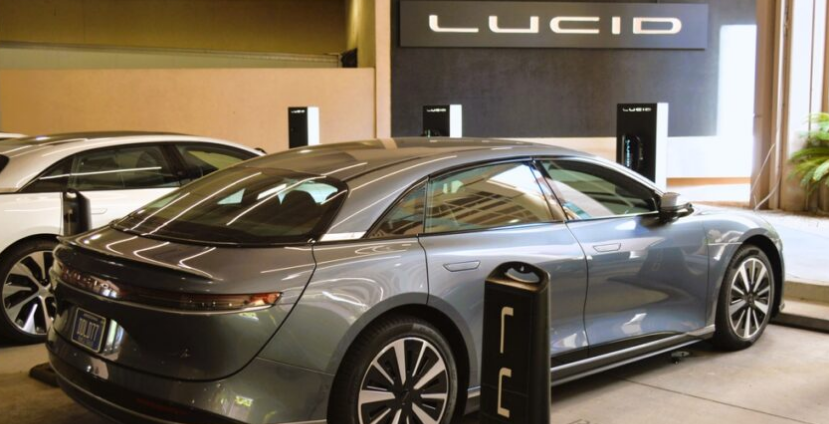
Under the agreement, Uber will begin rolling out Lucid’s upcoming Gravity electric SUVs—equipped with self-driving systems developed by robotics firm Nuro—starting in a major U.S. city in 2025. The vehicles will be integrated into the Uber platform gradually through 2030.
As part of the landmark deal, Uber will also take a $300 million equity stake in Lucid, becoming the carmaker’s second-largest shareholder after Saudi Arabia’s sovereign wealth fund. Additionally, Uber is investing hundreds of millions more in Nuro to advance autonomous vehicle (AV) capabilities tailored to ride-hailing.
“This collaboration has the potential to transform urban mobility,” said Uber CEO Dara Khosrowshahi. “We’re excited to work with Nuro and Lucid to bring autonomous driving technology safely to more people, and do so in a way that’s built specifically for the Uber platform.”
The partnership reinforces Uber’s evolving strategy of outsourcing AV development rather than building the technology in-house—a shift from its earlier approach under former CEO Travis Kalanick. Uber has already forged agreements with Waymo, Volkswagen, and China’s Baidu for similar self-driving initiatives.
Although Uber currently operates limited autonomous services in select U.S. cities, the new agreement is expected to scale those efforts dramatically. The partnership also positions Uber to compete more aggressively with rivals such as Tesla, which launched its own robotaxi service in Austin last month. Tesla CEO Elon Musk has pledged to expand the service into Los Angeles and San Francisco, even as the company faces scrutiny over its Full Self-Driving (FSD) system following several accidents.
The announcement provides a much-needed lift for Lucid. The EV maker has struggled with steep financial losses and leadership turnover. Its new CEO, Marc Winterhoff, has committed to ramping up production of the Gravity SUV—which is expected to retail around $95,000—as part of a broader turnaround plan. Following the Uber news, Lucid’s stock surged 25%.
Uber also confirmed it is ready to bring autonomous vehicles to the UK, though it is awaiting regulatory approval. While the previous UK government had forecast AV deployment by 2026, the newly elected Labour administration now expects implementation no earlier than 2027.
The deal is expected to solidify Uber’s role as a global leader in the commercialisation of self-driving technology. Rather than betting on one proprietary system, Uber’s multi-partner model offers flexibility and faster go-to-market options in an increasingly competitive mobility sector.