Small businesses operating in economically deprived urban areas are significantly less likely to secure funding compared to those in wealthier or rural parts of the UK, according to new research from the British Business Bank (BBB).
The state-backed development agency’s Small Business Finance Markets report for 2025 reveals “significant disparities” in access to finance, including credit cards, overdrafts, and loans, depending on a business’s geographic location. The findings highlight that where a company is based has a direct impact on its ability to obtain external funding, even within the same city or region.
The report notes that firms in deprived urban neighbourhoods are often more eager to seek financing to support growth but face greater challenges in securing it. Many entrepreneurs in these areas are also more likely to be discouraged from applying for loans due to previous rejections or perceived barriers from traditional lenders.
“This evidence shows that where your business is located has an influence on your ability to access finance, not just at a regional level, but also at a sub-regional level,” the report stated.
Richard Bearman, Chief Development Officer at the British Business Bank, said the agency was working to narrow the funding gap and ensure equal access to capital across the country. “The problem we are trying to solve is to ensure that businesses across the UK have access to capital and, where they have potential, we are supporting that potential,” Bearman said.
To address regional inequalities, the BBB will launch £340 million in new regional investment funds next April, targeting small and medium-sized enterprises (SMEs) in the east and southeast of England. This rollout will complete the bank’s nationwide network of regional funds, designed to boost the supply of debt and equity capital for local businesses.
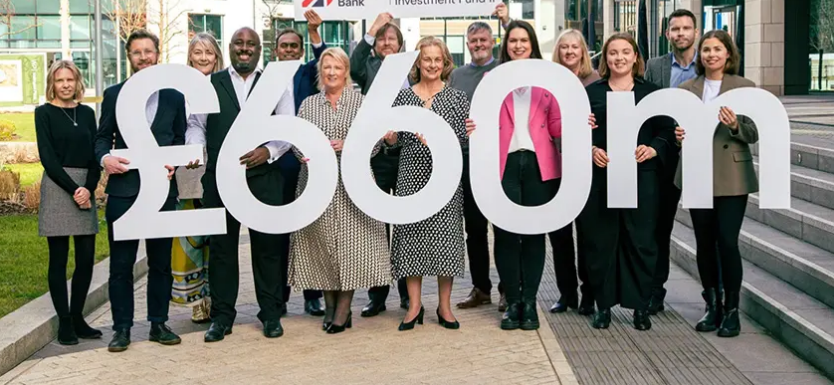
These funds build on previous initiatives such as the £660 million Northern Powerhouse Investment Fund II, which began lending to firms across northern England last year. The bank has also expanded access to its loan guarantee schemes for community development finance institutions (CDFIs), which specialise in lending to businesses in low-income areas that struggle to secure support from high street banks.
Overall, the report found that the share of smaller businesses using external finance slipped slightly from 46% to 45% last year, after a sharp rise the previous year. However, the national average conceals stark regional variations. In the West Midlands, 47% of firms obtained external finance, compared with just 39% in the East Midlands. Appetite for future borrowing also varied widely — 49% of West Midlands firms said they were willing to borrow to grow, versus only 17% in the East Midlands.
Bearman said the bank’s goal is to level the financial playing field and unlock business potential across all parts of the country. “We want to make sure that location is no longer a limiting factor,” he said.