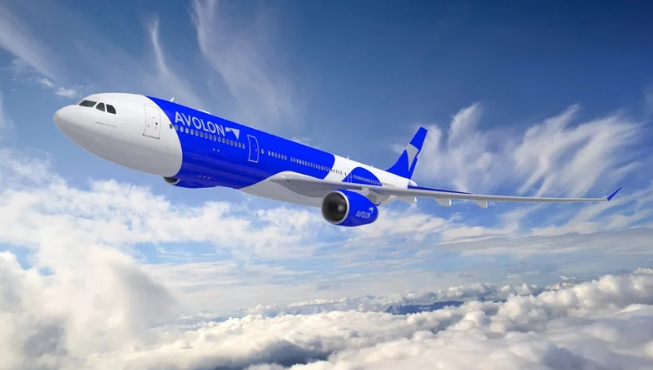
Global airline profits are projected to hit $41 billion this year, as strong passenger demand and favourable fuel prices support continued recovery from the pandemic, according to analysis by Irish aircraft leasing firm Avolon.
The firm predicts that growth will be led by India, the United Arab Emirates, and Saudi Arabia, which together have become key drivers of the aviation sector. “What we’ve seen is that there’s a handful of emerging countries that are benefiting from growing middle class populations, improving demographics, as well as the strength of a global connecting business models,” said Jim Morrison, chief risk officer at Avolon. “So those three countries hold orders for 3,000 aircraft today, of which 900 are going to be delivered over the next three years.”
Avolon, along with two other Irish leasing companies, controls roughly a sixth of the world’s passenger aircraft, giving it a unique vantage point on global trends.
In Europe, airlines are continuing to enjoy strong market conditions. Morrison noted that European carriers led the world in profitability in 2025 and are expected to maintain that position in 2026. Consolidation in the sector is also reshaping the continent’s aviation landscape, with Air France-KLM increasing its stake in Scandinavian airline SAS and Lufthansa expanding its ownership of Italy’s ITA.
Despite positive trends, the industry faces structural challenges. Backlogs at major aircraft manufacturers Boeing and Airbus mean many airlines cannot immediately expand capacity to meet rising demand. Morrison explained, “What we’ve seen in the aircraft manufacturing space is, during the pandemic period, production rates dropped, and so that’s led to 4,000 aircraft that weren’t built this decade. So there’s a strong undersupply of new aircraft that’s underpinning our business models going forward.”
Geopolitical tensions remain a concern for the sector. Rising political and economic uncertainty around the world could affect operations, though Morrison emphasized aviation’s resilience. “We are seeing uncertainty in the world around us – we’re seeing political risk, we’re seeing geopolitical risk as well, too. But this is an industry that survived through the 9/11 challenges, survived through Covid, survived through interest rate increases as well. Really resiliency and durability of aviation is part of our unique selling point,” he said.
Recent signs of easing recession fears in the EU and the US are expected to support travel demand further. Environmental pressures on airlines have also slightly abated, though industry leaders continue to prioritise reducing carbon emissions. “The industry is still very focused on improving its carbon intensity and adopting the latest and greatest technology to do so,” Morrison said. “The new technology aircraft that are delivering today, from Airbus and Boeing, are the best way for aviation to continue to reduce its carbon intensity.”
Analysts say that with a combination of emerging market demand, technological upgrades, and resilient business models, the global aviation sector is positioned for steady growth in 2026, even amid persistent challenges such as limited aircraft supply and geopolitical uncertainty.