Chinese electric vehicle (EV) manufacturers are stepping up their push into Europe, offering competitively priced, technologically advanced models that could disrupt the continent’s established automotive industry.
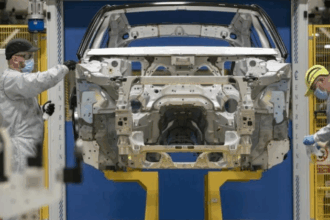
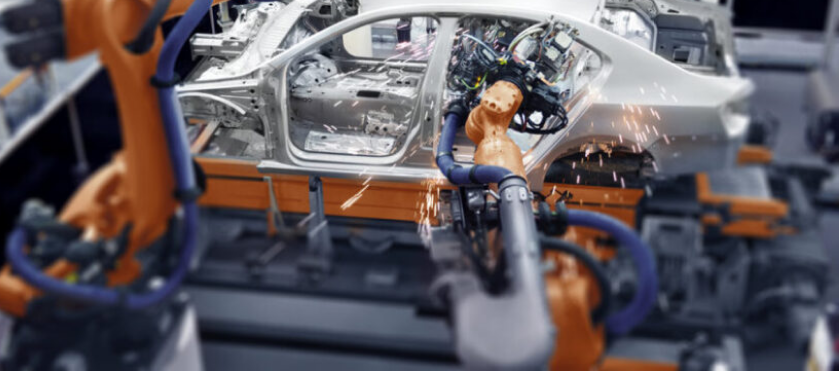
Premium EV maker Zeekr, owned by Geely, is already active in several European markets and plans to launch in the UK within two years. The company’s highly automated production lines, vertical integration, and proprietary battery and software systems allow for faster development cycles and cost efficiency — advantages that legacy carmakers, hindered by complex supply chains and slower innovation, struggle to match.
“All new cars sold in the UK and EU must be zero-emission by 2035, and Europe’s car industry is under huge pressure to adapt,” said Professor Peter Wells, director of the Centre for Automotive Industry Research at Cardiff University. “Chinese firms are nimble, fast and technologically advanced – especially in software, where European firms have struggled.”
In 2023, Europe registered almost two million fully electric vehicles, but high prices, limited charging infrastructure, and consumer hesitation remain hurdles. While manufacturers such as Volkswagen, Renault, Nissan, and Jaguar Land Rover are retooling for the electric era, analysts warn they remain years behind Chinese rivals in production capacity and control over critical battery mineral supply chains.
Former Aston Martin chief executive Andy Palmer cautioned that relying on tariffs would be a mistake. “Tariffs insulate the baby, so the baby never learns to walk,” he said, urging Europe to require local production and investment as the price of entry. Palmer pointed to Nissan’s Sunderland plant as an example of how domestic manufacturing can foster strong industry ecosystems.
Chinese EV brands have largely focused on smaller, more affordable models — such as Nio’s upcoming Firefly — in contrast to Europe’s emphasis on larger SUVs. Wells warned this strategy mismatch risks ceding the mass market to Chinese players.
The European Union has introduced tariffs of up to 45% on certain Chinese EV imports, but member states remain divided. Germany fears retaliatory measures against its exports, while France and Italy favour tougher trade barriers. Some Chinese firms are exploring alternatives, including shifting production to Turkey.
Analysts suggest Europe must prioritise innovation, affordability, and strategic partnerships over protectionist measures. Al Bedwell of GlobalData forecasts Chinese brands could hold about 15% of Europe’s electric car market by the mid-2030s — significant, but not overwhelming.
Partnerships are already forming, with Stellantis investing in Leapmotor and BMW and Audi partnering with Chinese firms. Automotive analyst Felipe Munoz argued that Europe must reduce taxes, streamline regulations, and boost R&D incentives to stay competitive.
Palmer remained hopeful: “We have a once-in-a-generation chance to reset Europe’s automotive industry. If we act quickly, Europe can still lead in EVs. If we rely on tariffs and delay tough decisions, we risk long-term decline.”