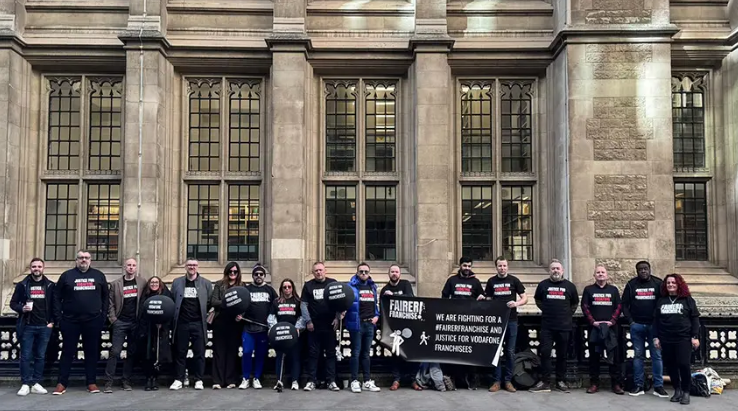
Vodafone is facing a landmark £85 million High Court case brought by 62 former franchisees, in a dispute that is drawing comparisons to the Post Office Horizon scandal and intensifying political scrutiny of the UK’s franchising model.
The case, which opened at the Rolls Building in London, centres on claims that Vodafone imposed unfair and arbitrary business decisions on franchise operators, causing widespread financial harm and, in some instances, severe personal consequences. The claimants allege that the company breached its duty of good faith by cutting commission payments without explanation, failing to pass on government business rate relief during the pandemic, and charging full rent while benefiting from rent-free periods in its own lease agreements.
Former franchisees also claim they were subjected to disproportionate fines, including one case in which a franchisee was penalised £10,000 over a £7.80 billing error. They argue that such practices undermined the viability of their businesses and contradict Vodafone’s public portrayal of its franchise model as a collaborative partnership.
The dispute has attracted political attention in Westminster. Claimant representatives met with MPs ahead of the hearing, and eight parliamentarians from multiple parties signed a letter urging Vodafone to provide clearer explanations and engage further on the issues raised. Richard Tice, among others, has highlighted the case, comparing it to systemic corporate failings seen in past scandals.
Questions in parliament focus on governance, transparency, and accountability. MPs are pressing Vodafone to explain why it conducted multiple internal investigations into its franchise programme, how whistleblower complaints were handled, and what the company knew about the impact of its decisions on franchisees. Reports indicate that more than 60 per cent of franchise agreements were terminated within four years, while substantial “goodwill” payments were made to some former operators outside legal channels.
The case is now being seen as a potential turning point for UK franchising regulation. Evidence submitted by claimants has already been cited in a recent Business and Trade Committee report, which highlighted the imbalance of power between large corporations and small business operators and the lack of effective oversight mechanisms.
Legal experts warn that the outcome could have far-reaching consequences, prompting new safeguards to protect franchisees and improve transparency across the sector. Government ministers are monitoring the proceedings closely, raising the prospect of legislative reforms depending on the court’s findings.
For the claimants, the hearing provides a long-awaited platform to present their grievances publicly. For Vodafone, it represents a major legal and reputational test. For the wider business community, the case may ultimately help redefine the relationship between major brands and the small enterprises that operate under their banner.