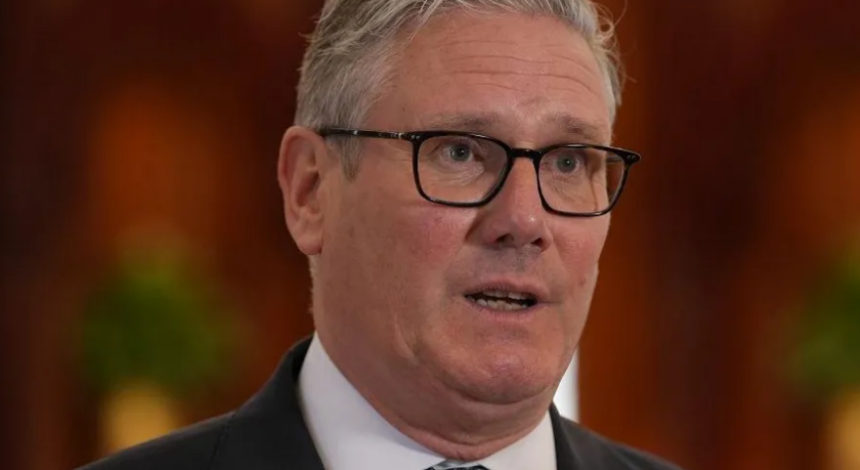
Prime Minister Sir Keir Starmer has called on the United States and Iran to “find a way through” following the collapse of initial peace talks aimed at ending the war, warning that further escalation in the Middle East must be avoided.
The negotiations, held in Pakistan, ended in the early hours of Sunday without an agreement. The talks have left uncertainty over whether a fragile two-week ceasefire between the two sides can continue to hold.
Downing Street confirmed that Sir Keir discussed the outcome with the Sultan of Oman during a phone call on Sunday. The UK was not directly involved in the negotiations, but officials said London remains closely engaged with regional partners amid growing instability.
In a statement, a Downing Street spokesperson said both leaders agreed it was “vital there was a continuation of the ceasefire” and urged all parties to avoid further escalation. The prime minister also stressed the importance of maintaining diplomatic channels after the breakdown in talks.
US Vice-President JD Vance, who attended the discussions in Pakistan, said Iran’s refusal to commit to abandoning nuclear weapons development was the key obstacle to reaching a deal. Iran’s delegation leader, Parliament Speaker Mohammad Bagher Ghalibaf, said Tehran had put forward “forward-looking initiatives” but claimed trust between the parties remained lacking.
Health Secretary Wes Streeting described the failure of the talks as “disappointing,” while stressing that even unsuccessful negotiations represented an important diplomatic step. He said the UK continued to support efforts to reach a negotiated settlement that would “put Iran’s nuclear ambitions to bed.”
Streeting also defended Sir Keir’s decision not to commit the UK to US-Israeli military action, arguing that diplomatic engagement remained the preferred route.
Speaking separately, he criticised recent remarks by former US President Donald Trump regarding the conflict, describing them as “outrageous,” while adding that Trump should be judged on actions rather than rhetoric.
The breakdown in talks comes amid wider tensions between London and Washington over foreign policy direction. Sir Keir has previously expressed frustration at global instability affecting energy and living costs, linking economic pressure in the UK to international conflict and leadership decisions abroad.
Attention is also turning to maritime security, with the UK preparing to host discussions this week on reopening the Strait of Hormuz, a key shipping route disrupted during the conflict. Questions remain over whether British naval assets could be deployed to support safe passage through the area.
Elsewhere in Westminster, political parties voiced differing responses to the crisis. The Liberal Democrats warned that rising food prices linked to energy disruption could worsen later this year, while Conservatives called for increased defence spending. The Green Party urged renewed diplomacy and a halt to military escalation, calling for a return to negotiations involving all sides.