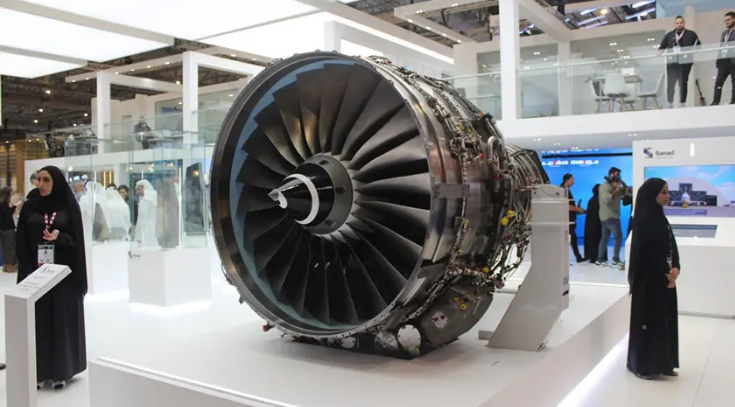
Rolls-Royce has warned that its next-generation UltraFan engine, aimed at the high-demand narrowbody aircraft market, could be built outside the UK unless the government provides financial backing, raising fresh questions about Britain’s aerospace industrial strategy.
The FTSE 100 engineering group is seeking to re-enter the single-aisle engine market, the fastest-growing segment of global civil aviation, with a more fuel-efficient UltraFan platform developed at a cost of around £1 billion over the past decade. Chief executive Tufan Erginbilgic said moving from research and development to full-scale production will depend on public support similar to that received by competitors abroad.
“This kind of support of industry is not uncommon,” Erginbilgic said, noting that US rivals GE Aerospace and Pratt & Whitney, as well as France’s Safran, receive two to three times the assistance Rolls-Royce currently gets. “It is a competitive world and you need to think about that.”
The company has reportedly requested up to £200 million from the UK government and has held discussions with Business Secretary Peter Kyle. While Rolls-Royce recently announced plans for up to £9 billion in share buybacks over the next three years, Erginbilgic insisted industrial backing for major aerospace programmes is standard globally and aligns with the government’s own industrial strategy, which identifies narrowbody engines as a critical growth area.
“Narrowbody is the single biggest opportunity in a generation,” he said. “It is natural for the UK government to support it. Not supporting it would be a strange thing to do.”
If the UK declines, Rolls-Royce is understood to be considering alternative production locations, including Germany, where it builds business jet engines, and the United States, where it produces military engines. Erginbilgic said a domestic UltraFan programme could support up to 40,000 jobs, establish a new UK supply chain, and generate at least £100 billion in long-term economic value, estimating that every £1 invested could deliver £34 in growth.
The company exited the narrowbody market in 2011 after selling its stake in a joint venture with Pratt & Whitney, a move widely seen as a strategic misstep. Since then, Rolls-Royce has relied on long-haul engines such as the Trent XWB for the Airbus A350 and the Trent 1000 for the Boeing 787. Re-entry into the short-haul market comes as rivals face operational challenges, including Pratt & Whitney’s durability issues with geared turbofan engines, which have caused delivery delays and aircraft groundings.
Erginbilgic said UltraFan would offer superior fuel efficiency and durability compared with current narrowbody engines. He confirmed Rolls-Royce is exploring industrial partnerships to share risk, adding that multiple parties are in discussions.
With global demand for single-aisle aircraft expected to dominate the next aviation cycle, the government’s decision on funding could determine whether the next phase of Rolls-Royce’s civil aerospace expansion remains in the UK or shifts abroad.