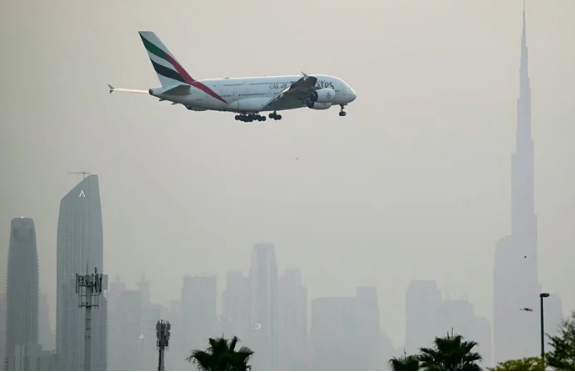
Travel through the Gulf has been severely disrupted as passengers face uncertainty over flights amid regional tensions. Only a limited number of flights are currently operating, leaving many travelers scrambling to adjust plans for the coming weeks and months.
Brian Sullivan, a Dublin native living in Australia for 21 years, had planned to fly home from Melbourne with his wife and three children on March 13 via Abu Dhabi. He said yesterday, “We would’ve been on the plane right now.” Etihad Airways offered a cancellation and refund, which the family accepted. Rebooking through alternative routes would have increased the cost of the €6,000 trip to nearly €16,000, Sullivan added.
Combined, Emirates, Qatar Airways, and Etihad typically carry more than half of passengers between Europe, Australia, New Zealand, and the Pacific Islands. Etihad is now operating at just 15% of pre-war capacity, while Qatar Airways maintains a limited schedule with no Dublin-Doha connections. Dubai, the world’s largest air hub, has seen Emirates operate at roughly 60% of its usual activity.
Flights from Dublin to Sydney via Dubai were listed at around €600 one way on Emirates’ website for the weekend, but many travelers are unwilling to take the risk. “There’s no way we’re going to get on the plane when there’s rockets flying around in the air in that area. Not a chance,” Sullivan said. The Irish Department of Foreign Affairs continues to advise avoiding non-essential travel to Kuwait, Bahrain, the UAE, Qatar, and Saudi Arabia.
With Gulf airspace disruptions, passengers are exploring alternative routes. Thai Airways, for example, has seen increased demand for flights connecting Europe to Asia. Paul Hackett, CEO of Click&Go and Vice-President of the Irish Travel Agents Association, explained that before the UAE became a hub, Australia-bound passengers often transited through Singapore or Bangkok, requiring multiple stopovers.
The disruptions have also driven fare increases. Airlines including KLM, Qantas, Air New Zealand, SAS, and Thai Airways have raised long-haul prices amid soaring jet fuel costs, which have doubled to around $160 per barrel since early March. European carriers with hedging contracts, such as Air France, Lufthansa, and Aer Lingus, are partially protected, while unhedged US airlines may pass higher costs to travelers.
Middle East tourism, valued at $367 billion annually, is already suffering. Consultancy Tourism Economics estimates the conflict could result in 23 to 38 million fewer visitors this year, costing the region up to $56 billion. For Irish travelers, the Gulf is not a primary holiday destination, but cancellations of Dubai cruises and uncertainty over flights are creating concern. Hackett noted that demand may shift to safer destinations such as Spain, Portugal, and the Canary Islands, potentially pushing prices higher.
Passengers and travel companies are now forced to weigh safety against cost as regional instability continues to impact schedules, fares, and the wider tourism industry.