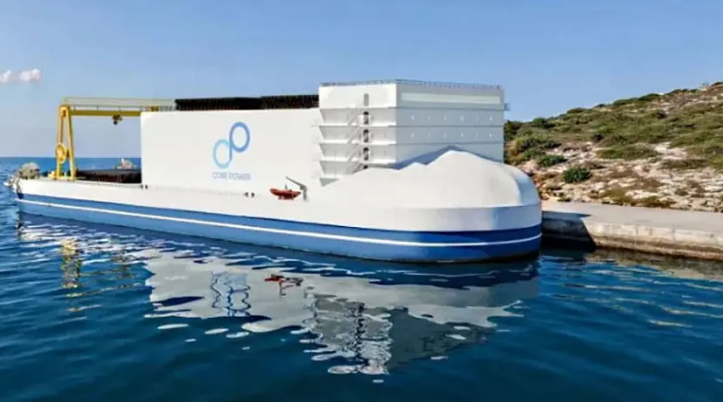
A British start-up based in west London has signed an agreement with the US government to help develop a fleet of nuclear-powered cargo ships, as Washington seeks to rebuild its commercial shipbuilding industry and compete with China’s growing maritime strength.
Core Power, based at Chiswick Park, entered into the public-private partnership with the US Maritime Administration in Washington on Monday. The agreement is intended to speed up the development of US-flagged merchant vessels powered by nuclear reactors.
The programme is also aimed at strengthening the US shipbuilding sector, which has lost significant market share to lower-cost Chinese competitors.
Core Power has raised $200 million from investors including Japanese companies Mitsui, Mitsubishi and Sumitomo to develop its nuclear propulsion technology. The company is targeting construction of its first nuclear propulsion systems in 2028 and plans to work with established shipbuilders on the vessels’ hulls.
Chief executive Mikal Boe said nuclear-powered commercial shipping could help the US regain maritime strength as other countries explore the technology.
The company was founded in 2018 by Boe, a Norwegian shipping and commodities executive. Its British operation reported an operating loss of £19.4 million in 2024 and employed 41 people, according to its latest available accounts.
The partnership follows a US initiative launched in May that sought information from companies developing small modular reactors for commercial shipping. The US Maritime Administration worked with the Coast Guard, Nuclear Regulatory Commission and Department of Energy on the programme.
Stephen Carmel, administrator of the Maritime Administration, said the agreement would support the development of a secure US-flagged fleet and strengthen the country’s position in maritime transport.
Nuclear propulsion has been used extensively in military submarines and other naval vessels but has had limited success in commercial shipping. High construction costs, safety concerns, regulation and insurance requirements have all restricted its adoption.
Supporters argue that advances in reactor technology could make nuclear-powered cargo vessels safer and more commercially attractive. Boe has said such ships could potentially travel faster, carry more cargo and avoid some environmental charges associated with conventional fuel.
Russia currently operates the world’s largest nuclear-powered commercial fleet through its use of nuclear icebreakers.
The US government and Core Power will now work on establishing a commercial framework covering licensing, safety and insurance for nuclear-powered vessels.
For Britain, the immediate economic benefits are expected to be limited because the ships will be US-flagged and construction will take place through American shipbuilders. However, the project could create opportunities for British engineering companies involved in nuclear technology, design and specialist manufacturing.
The agreement also highlights growing interest in advanced nuclear technology as governments and companies search for alternatives to fossil fuels in sectors that are difficult to decarbonise.
Core Power’s first propulsion systems are not expected before 2028, meaning regulatory approval, financing and technical development will determine whether the ambitious nuclear shipping programme can move from plans to commercial vessels.