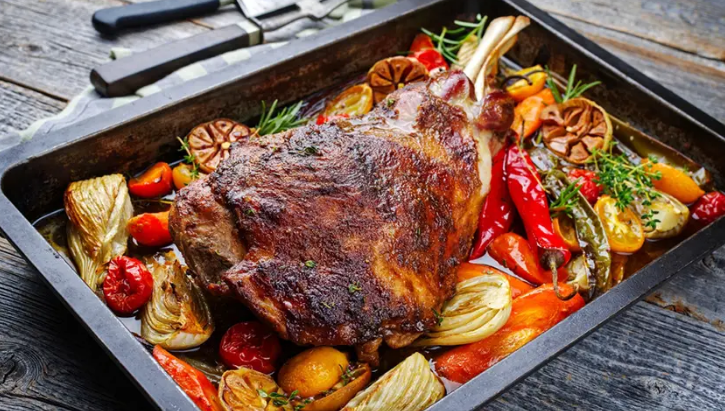
British households preparing for Easter lunch this weekend are facing the steepest lamb prices on record, driven by a rare calendar overlap with the end of Ramadan, a shrinking national flock, and strong export demand.
Retail analysts Assosia report that the average price of a leg of lamb across Tesco, Morrisons, Asda, and Sainsbury’s has risen to £16.23 per kilo, up 12.5 per cent from £14.43 a year ago. Sainsbury’s has seen the sharpest increases, with a British butterflied leg climbing by a third to £20, while the Taste the Difference Welsh Hill half leg rose 22.4 per cent to £17.75. Tesco’s Finest lamb shoulder is also at £17.75, a 16.4 per cent jump.
Wholesale markets reflect the surge, with the Agriculture and Horticulture Development Board reporting that lamb prices have moved from roughly £7.20 per kilo last Easter to nearly £8.40 this year. Independent butchers are also feeling the strain. Sam Bagge, manager of Walsingham Farm Shop in Norfolk, said a 2.5kg leg of high-welfare lamb now retails at £75, up from £65 last year. He noted that budget-conscious shoppers are increasingly switching to rolled pork shoulder, which has seen demand rise by 30 per cent.
James Little, a livestock auctioneer, described the situation as a “perfect storm.” Eid traditionally boosts lamb consumption, and with Easter arriving early this year, the two peaks have overlapped. He said Britain’s growing Muslim population is sustaining strong year-round demand, with AHDB survey data indicating that 80 per cent of halal consumers eat lamb at least once a week, compared with just 6 per cent of the wider population. On top of that, he highlighted high export demand from France, Belgium, Holland, and Portugal.
Dave Barton, chairman of the National Farmers’ Union livestock board, said the price rise reflects demand outstripping supply both domestically and internationally. The National Sheep Association reports that the UK breeding ewe population has fallen to 14.7 million, the lowest in living memory. Mr Barton pointed to the phasing out of government subsidies, rising operating costs, and market volatility as factors behind reduced farmer confidence. He called on ministers to support investment aimed at rebuilding the national flock to ensure a sustainable and resilient sheep sector.
Welsh sheep farmer Gareth Wynn Jones noted that export appetite remains strong, with Portuguese buyers particularly interested in Welsh mountain lambs. However, he warned that last year’s dry weather reduced the number of pregnant ewes, limiting this year’s lamb crop. The combination of tight supply and strong demand is expected to keep prices elevated well beyond Easter.