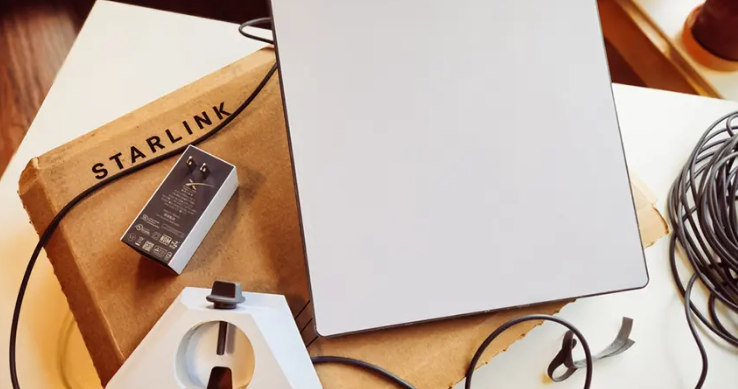
Elon Musk’s satellite internet provider Starlink has launched aggressive price cuts in the UK, challenging traditional broadband providers and reshaping the country’s fixed-line market. The company now offers high-speed broadband for £35 a month in select areas, down from £55, undercutting comparable services from BT, which charges around £40, and Virgin Media O2, priced at £36.
Even when including Starlink’s £94 installation fee, analysts note that the service remains cheaper than BT over a standard two-year contract. The package provides download speeds of approximately 100Mbps, sufficient for streaming, gaming, and video calls across multiple devices.
James Ratzer, an analyst at New Street Research, said the move sends a clear warning to the sector. “Starlink is becoming an incremental player in the UK broadband market, and this will put further pressure on BT through Openreach line losses, and to a lesser extent on Virgin Media O2,” he said. Openreach, fully owned by BT, manages the UK’s physical broadband network, and any sustained customer loss to satellite or wireless alternatives could affect its long-term business model.
The timing of the price cuts is challenging for BT, which has faced scrutiny over its digital landline switchover after reports that some elderly and vulnerable customers lost connectivity over the Christmas period. Regulators at Ofcom could increase oversight if these problems are found to be widespread.
Starlink, part of SpaceX, operates roughly 9,500 low-earth orbit satellites, allowing broadband access to rural and remote areas underserved by fixed-line networks. The service has also been explored as a solution for patchy connectivity on railways and other transport routes. As of mid-2025, Starlink had around 110,000 UK subscribers, with analysts projecting this could rise to 350,000 as coverage expands and prices fall, representing more than 1 per cent of the national broadband market.
The company’s new pricing signals a shift from its earlier premium positioning, which mainly targeted rural households and niche users. The £35 tariff was introduced just two months after a price reduction from £75 to £55, indicating a move toward mainstream competition.
Competition in the sector is expected to increase further with Amazon’s upcoming Project Kuiper, a rival satellite broadband service planned for later this year. Analysts have previously estimated that conventional broadband subscriptions could fall by 250,000 in a single year as consumers explore satellite and fixed wireless alternatives.
In response to the changing market, established telecom companies are forming partnerships with satellite operators. BT has teamed with Starlink to improve rural coverage, while O2 has plans with Musk’s firm for a direct-to-mobile satellite service. Vodafone has partnered with AST SpaceMobile and received regulatory approval to test satellite-based mobile connectivity in the UK.
Starlink’s price cuts mark a turning point in the UK broadband market, signaling that space-based networks are emerging as a direct competitor to the country’s leading telecom providers.