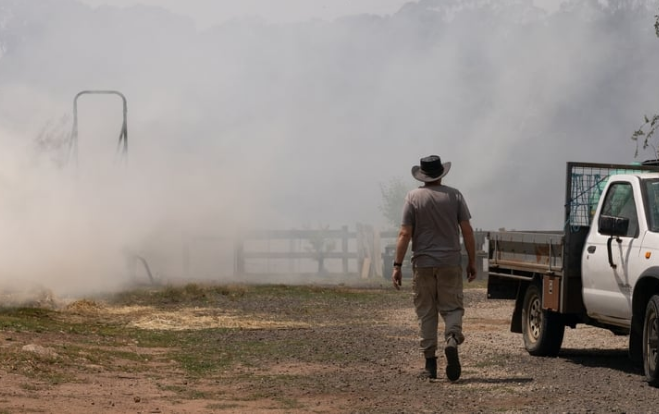
Bushfires have destroyed hundreds of buildings across southeast Australia, authorities confirmed, as the first death from the disaster was reported.
The fires, fueled by a severe heatwave, have ravaged more than 300,000 hectares in the state of Victoria, with temperatures soaring above 40C. Emergency crews have been working to contain the blazes that have swept through rural towns, farmland, and native forests.
Emergency Management Commissioner Tim Wiebusch said over 300 structures had been destroyed, including sheds and other buildings on rural properties. More than 70 homes were lost to the flames.
“We’re starting to see some of our conditions ease, and that means firefighters are able to start getting on top of some of the fires that we still have in our landscape,” Wiebusch told reporters.
Police confirmed one person died in a bushfire near Longwood, about two hours north of Melbourne. Chris Hardman from Forest Fire Management Victoria described the loss as devastating. “We really feel for the local community there and the family, friends and loved ones of the person that is deceased,” he told national broadcaster ABC.
Residents shared harrowing accounts of the fires. Cattle farmer Scott Purcell described the Longwood blaze, saying, “There were embers falling everywhere. It was terrifying.” Images from the area showed the night sky glowing orange as flames tore through bushland.
Another fire near the town of Walwa generated its own localised thunderstorm as the heat from the blaze interacted with lightning. Hundreds of firefighters from across Australia have been mobilized to assist local crews.
Prime Minister Anthony Albanese said he was in discussions with Canada and the United States for potential additional support. Officials declared a state of disaster as the fires reached critical levels on Tuesday.
The heatwave gripping much of Australia has contributed to what authorities say are some of the most dangerous bushfire conditions since the “Black Summer” of 2019–2020. That period of fires devastated eastern Australia, destroying thousands of homes and millions of hectares of land while shrouding cities in heavy smoke.
Researchers note that Australia’s climate has warmed by an average of 1.51C since 1910, a change that has contributed to increasingly extreme weather patterns. The country remains a major global producer and exporter of gas and coal, two fossil fuels linked to climate change.
The current fires highlight the ongoing challenges Australia faces as temperatures rise and extreme weather events become more frequent. Emergency crews continue to battle flames across the state, and authorities are urging residents in affected areas to remain vigilant and follow safety guidance.