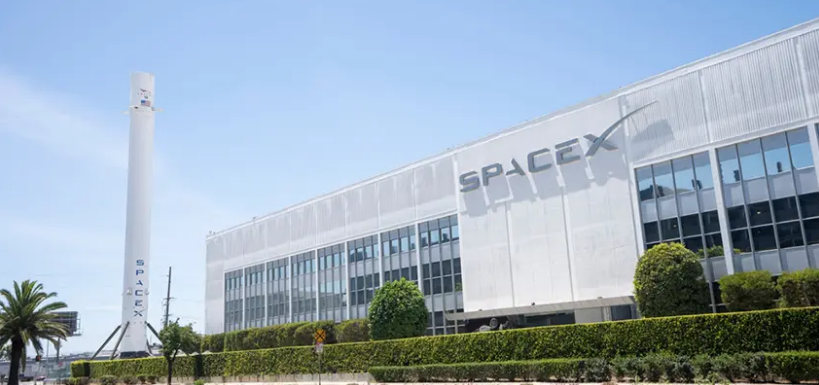
Elon Musk’s SpaceX is moving closer to what could become one of the largest stock market debuts ever, with plans to go public as soon as next year at an estimated valuation of $1.5 trillion. If completed, the listing would fall just short of Saudi Aramco’s $1.7 trillion IPO in 2019, which remains the largest in history.
According to Bloomberg, SpaceX executives and financial advisers are advancing preparations for the flotation, which could raise more than $30 billion. The offering would position the company as a central player in the rapidly growing commercial space sector.
Founded in 2002 by Musk, SpaceX has sought to revolutionize space travel by lowering launch costs and advancing the goal of human missions to Mars. Over the past two decades, the company has reshaped the global launch market with reusable Falcon 9 and Falcon Heavy rockets, serving governments, commercial satellite operators, and private clients.
In addition to its launch business, SpaceX has developed Starlink, a global broadband satellite network, which has become a major revenue driver. Musk told investors in June that Starlink and other commercial operations are expected to generate around $15.5 billion in revenue this year. He predicts that by next year, SpaceX’s commercial space revenues will surpass NASA’s annual launch and spaceflight budget, which stands at roughly $1.1 billion.
SpaceX’s Starship program remains central to its long-term strategy. The 400-foot launch system is being designed to carry cargo and eventually humans to the Moon and Mars. Although still undergoing development and testing, Starship is expected to play a key role in NASA’s Artemis programme and future deep-space missions.
The company has also set new benchmarks in operational scale. In 2024, SpaceX completed 134 Falcon launches, setting a world record. This year, it is on track for 170 launches, driven by demand for satellite deployments, commercial contracts, and military work. SpaceX’s growth has made it a contender for major defence programmes, including the proposed “Golden Dome” missile defence initiative, which would rely on advanced satellite networks for threat detection.
A $1.5 trillion IPO would eclipse nearly all prior technology offerings and signal a major shift in global aerospace leadership. SpaceX has moved from a scrappy contractor for NASA into a dominant force in commercial launch services, satellite broadband, and next-generation space infrastructure. Analysts say the potential public offering would not only reward investors but also highlight the growing strategic and economic significance of commercial space ventures.
SpaceX’s entry into the public markets would mark a major milestone in both the commercial space industry and global financial markets, underscoring the increasing convergence of technology, defence, and infrastructure in the 21st-century space economy.