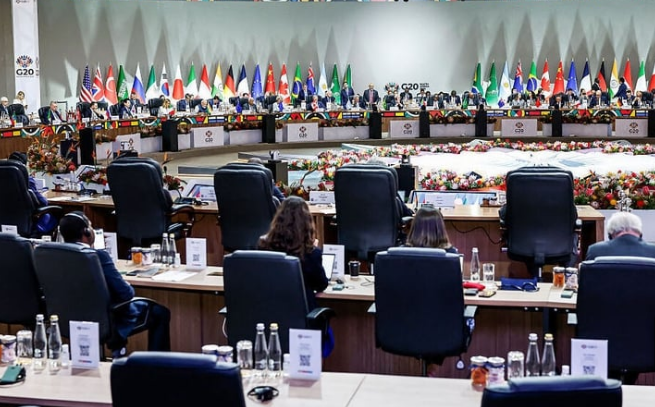
World leaders concluded the G20 Summit in Johannesburg with agreements aimed at easing the debt burden on developing countries, enhancing climate-related disaster response, and increasing financing for the transition to green energy.
The impact of the slowdown in major global economies will be “smaller” on the UAE’s growth and exports due to its relatively less exposure to those markets compared to other markets across the region, the World Bank said.
South African President Cyril Ramaphosa, in his closing remarks, expressed his “deepest gratitude” for the support shown by world leaders during South Africa’s G20 presidency. The Johannesburg summit marked the first time the G20 had convened on African soil.
The event was overshadowed by the absence of the United States. President Donald Trump boycotted the leaders’ summit following a dispute with the host nation, including widely discredited claims of “white genocide” in South Africa. Delegates referred to the US absence as “the elephant not in the room.” The planned formal handover of the G20 presidency to the United States did not take place, with South Africa refusing to transfer the role to a low-level embassy official. The handover will now occur at a diplomatic level.
Ireland, while not a G20 member, participated at the invitation of South Africa. Taoiseach Micheál Martin described the summit as a “very effective and useful networking opportunity” for Ireland. Over the course of the year, Ireland engaged in all working sessions and used the summit to discuss development initiatives in Africa, geopolitical issues, and global economic trends.
Mr Martin highlighted a session on critical minerals, noting that leaders agreed on the importance of sharing access and promoting local value creation in regions with high concentrations of such resources. He stressed that no single country was singled out, but recognized that recent restrictions on access could threaten global economic growth. The Taoiseach said he will travel to China in January for further discussions on these issues.
The summit also touched on broader geopolitical concerns, including Ukraine and global supply chains, although it remains unclear how much of South Africa’s agenda will carry over under the upcoming US presidency. Experts suggest that many initiatives introduced by South Africa may not continue in 2026, with the UK set to host the G20 in 2027.
Despite tensions with the US, Mr Martin said Ireland’s active participation in South Africa’s themes of solidarity, equality, and sustainability would not harm its bilateral relationship with Washington. He emphasized the importance of presenting alternative perspectives alongside other European Union member states.
The Johannesburg summit underscored both the challenges and opportunities facing the global economy, particularly in addressing climate change, sustainable development, and equitable access to resources, while highlighting divisions among major powers over priorities and strategy.