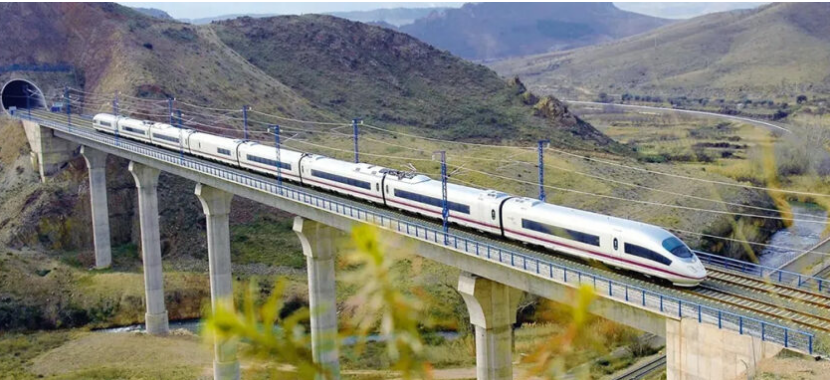
A new contender is emerging to rival Eurostar’s three-decade dominance of the Channel Tunnel. Gemini Trains, a start-up operator backed by major transport and technology partners, has announced a landmark deal with Siemens Mobility to supply a fleet of next-generation high-speed trains.
The order covers ten Velaro Novo trains — Siemens’ latest and most energy-efficient model — marking a significant milestone in Gemini’s plan to launch passenger services connecting London, Paris, Brussels, and Cologne. The company is partnering with Uber to integrate ticketing and connections via the Uber app, with the potential for branding the services as “Uber Trains.”
Adrian Quine, chief executive of Gemini Trains, described the collaboration as a transformative step for European rail. “Our partnership with Uber, Siemens, and Rock Rail creates a powerful alliance to deliver competitively priced, sustainable train services linking the UK to France, Belgium and, for the first time, Germany,” Quine said.
Founded by a team of transport industry veterans and chaired by Lord Berkeley, Gemini is one of three new entrants seeking approval from the UK’s Office of Rail and Road (ORR) to operate cross-Channel routes. Eurostar has held exclusive access through the Channel Tunnel since its launch in 1994, but growing pressure from regulators and consumers for competition and lower fares has opened the door to challengers.
Gemini plans to operate from Stratford International in east London rather than Eurostar’s St Pancras International terminus, which is near capacity. The company also hopes to reopen Ebbsfleet International Station in Kent to expand passenger capacity and improve accessibility for southeast England travellers.
Rock Rail, one of the UK’s leading rolling stock investment firms, will provide financial backing for the project. Meanwhile, Siemens’ £200 million manufacturing site in Goole, East Yorkshire, could play a key role in assembling components for the new trains — potentially creating domestic supply chain benefits and new jobs.
The Velaro Novo fleet represents the next generation of Siemens’ high-speed technology, building on the Class e320 model currently used by Eurostar. The updated design offers lighter construction, higher passenger capacity, and improved energy efficiency, making it compatible with both British and continental European networks.
Eurostar is also in the process of renewing its fleet but is expected to face political and commercial pressure to favour French manufacturer Alstom for its next order. Other prospective competitors — including Virgin Trains and a joint Italian-Spanish venture led by FS and the Cosmen family — are reportedly considering Alstom’s Frecciarossa trains for their bids.
While no new cross-Channel services are likely to begin before 2030 due to regulatory reviews and infrastructure limitations, Gemini’s combination of engineering innovation, digital integration, and strong financial backing positions it as the most credible challenge yet to Eurostar’s long-standing monopoly on European high-speed rail travel.
Check out global latest news at Heraldberg for ongoing updates.