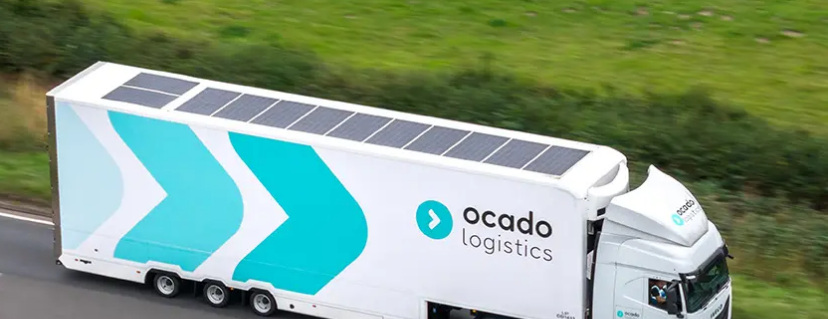
Ocado has begun rolling out zero-emission refrigeration units across its flagship double-deck trailer fleet as part of a major push to cut greenhouse gas emissions and lower operating costs.
The online grocer confirmed that it is now equipping its trailers with Sunswap’s Endurance technology, which uses batteries and solar panels instead of diesel to keep fresh and frozen produce at the required temperatures. The switch represents one of the company’s most significant steps yet toward greener logistics.
Each Endurance unit fully eliminates the need for diesel, avoiding up to 20.5 tonnes of carbon dioxide emissions annually. The technology also delivers major financial savings, reducing operating costs by as much as 81% compared with traditional refrigeration systems. Integrated solar panels on the trailer roofs provide supplementary power, extending the units’ range and reducing reliance on grid charging.
According to Sunswap, the units can maintain frozen goods for up to 24 hours or chilled goods for as long as two months on a single charge. The company says this ensures reliable temperature control without the limitations often associated with sustainable alternatives.
The deployment began in July and forms part of Ocado’s long-term strategy to achieve net-zero emissions across its value chain by 2040. That pledge has been validated by the Science-Based Targets initiative (SBTi) and includes a target to reduce Scope 1 and 2 emissions by 42% by 2030.
Michael Lowe, chief executive of Sunswap, said the Ocado rollout showed that zero-emission solutions are ready for mainstream adoption. “We’re delighted that Ocado has chosen Sunswap’s zero-emission refrigeration technology. This deployment demonstrates that electric refrigeration can meet the operational requirements of major grocery retailers while supporting their sustainability goals,” he said.
Ocado’s investment reflects wider trends across the retail and logistics industries, where companies face mounting pressure to decarbonise transport operations in line with government targets and consumer expectations. Heavy goods vehicles and refrigeration systems are responsible for a significant share of emissions within supply chains, making them a priority area for innovation.
Analysts note that Ocado’s move may set a precedent for other major grocery retailers in the UK and beyond. With the potential for both environmental and financial gains, the transition to zero-emission refrigeration could accelerate as firms seek to balance sustainability commitments with cost efficiency.
For Ocado, the adoption of Sunswap’s technology signals a tangible step toward delivering on its climate promises while strengthening its position as a leader in sustainable retail logistics.