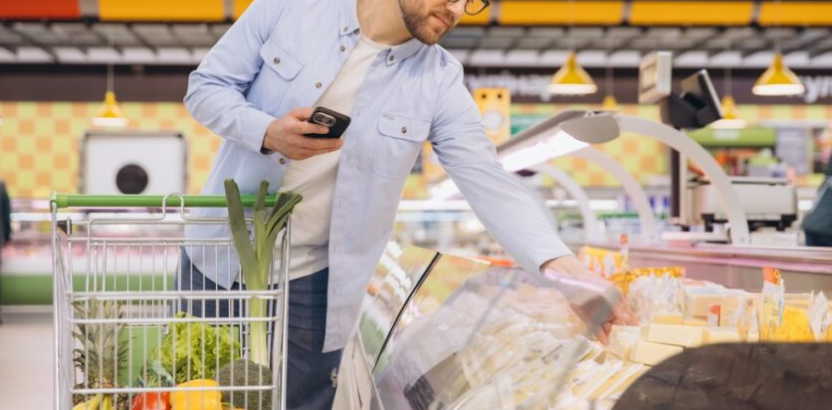
Food inflation in the UK has climbed to its highest level in a year and a half, piling further pressure on households already struggling with rising living costs.
According to the latest Shop Price Monitor from the British Retail Consortium (BRC) and NIQ, food prices rose by 4.2 per cent in August, up from 3.5 per cent in July. This marks the fastest pace of food price growth since February 2024.
Fresh food inflation accelerated sharply, rising from 3.2 per cent in July to 4.1 per cent in August, largely driven by higher dairy costs, including butter and eggs. Meanwhile, prices of packaged and long-life goods — known as ambient foods — slowed slightly, though they still increased by 4.2 per cent compared with 5.1 per cent the previous month.
Overall shop price inflation also crept higher, reaching 0.9 per cent in August. This came despite non-food goods recording a fall of 0.8 per cent.
Cost-of-living pressures deepen
Helen Dickinson, chief executive of the BRC, said the rise in food prices was a fresh blow to households.
“Shop price inflation hit its highest rate since March last year, fuelled by food price rises. This adds pressure to families already grappling with the cost of living,” she said.
She added that retailers were trying to shield customers but faced mounting costs linked to government policy. “The £7 billion in new costs flowing through from last year’s budget has created an uphill battle for retailers,” Dickinson warned.
The Bank of England recently identified April’s increase in national insurance contributions as one of the factors pushing up food prices, alongside global supply chain strains and volatile commodity markets.
Industry concerns over taxes
Earlier this month, more than 60 retail bosses — including leaders at Tesco, Sainsbury’s and Boots — wrote to Chancellor Rachel Reeves urging her to avoid fresh tax rises in the autumn budget. The letter, co-ordinated by the BRC, warned that additional costs could derail efforts to ease the pressure on households. Executives cautioned that food and drink inflation could climb as high as 6 per cent later this year unless conditions improve.
Mike Watkins, head of retailer and business insight at NIQ, said the August figures reflected several factors. “Global supply costs, seasonal food inflation driven by weather conditions, the conclusion of promotional activity linked to recent sporting events, and a rise in underlying operational costs have all played a part,” he explained.
Pinch point for families
While supermarkets continue to expand price-matching and discounting schemes, industry leaders say government policy, high energy bills and rising wages are limiting their ability to absorb costs.
For many families, food shopping remains one of the most acute financial pressures as the UK heads into autumn. Analysts warn that without relief in global supply chains or domestic policy, the cost of essentials could keep rising well into next year.