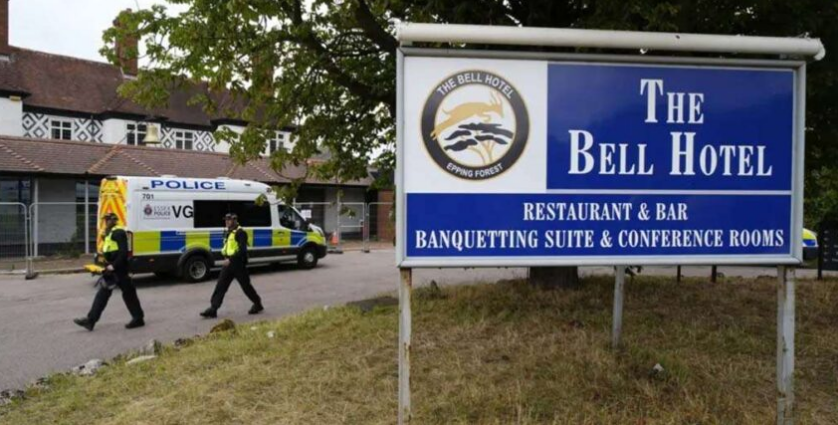
Home Secretary Yvette Cooper is preparing to challenge a High Court ruling ordering the closure of a migrant hotel in Essex, amid warnings the judgment could set a precedent for asylum housing across the country.
Security Minister Dan Jarvis confirmed on Wednesday that the government would appeal the decision to shut down the Bell Hotel in Epping. He said the aim was to ensure that any hotel closures were carried out “in a controlled and coordinated manner” under the supervision of the Home Office and its contractors.
The legal dispute arose after Epping Forest District Council successfully argued that the hotel required planning permission to be used as long-term accommodation for asylum seekers. The High Court ruled that all residents must vacate the property by 12 September 2025, unless the site’s owner, Somani Hotels, secures a successful appeal.
The case has been closely watched following months of heated protests at the site, where campaigners voiced opposition to the hotel’s use for migrant housing. Local councillors raised public safety concerns and highlighted the location’s proximity to schools and care homes as grounds for their legal action.
The Home Office’s legal team has cautioned that the ruling could embolden other local authorities to mount similar challenges, potentially reshaping the way asylum accommodation is managed nationwide. “This government will close all asylum hotels and we will clear up the mess that we inherited from the previous government,” Jarvis said. “But these closures need to be done in a managed and ordered way. That’s why we’ll appeal this decision.”
Labour pledged during the election campaign to end the use of asylum hotels by 2029, in line with its manifesto commitments. More than 32,000 asylum seekers are currently being housed in around 210 hotels across the UK, a system the government has vowed to phase out in favour of alternative accommodation.
Officials have previously argued that removing asylum seekers from hotels too quickly could exacerbate tensions in local communities and even heighten the risk of violent protests. In the Epping case, the Home Office sought to intervene but was denied by the judge, who ruled that its involvement would not materially affect the planning dispute.
The judgment has already sparked wider political and legal debate. Several other councils, including Labour-led authorities, have threatened to launch similar legal challenges, raising the prospect of further clashes between local government and Whitehall. Planning experts say the decision could force ministers to seek formal planning approval before repurposing hotels for migrant housing in future.
The Epping ruling, if upheld, could mark a turning point in Britain’s asylum system, setting limits on how and where hotels can be used, and further complicating government efforts to wind down the controversial practice.