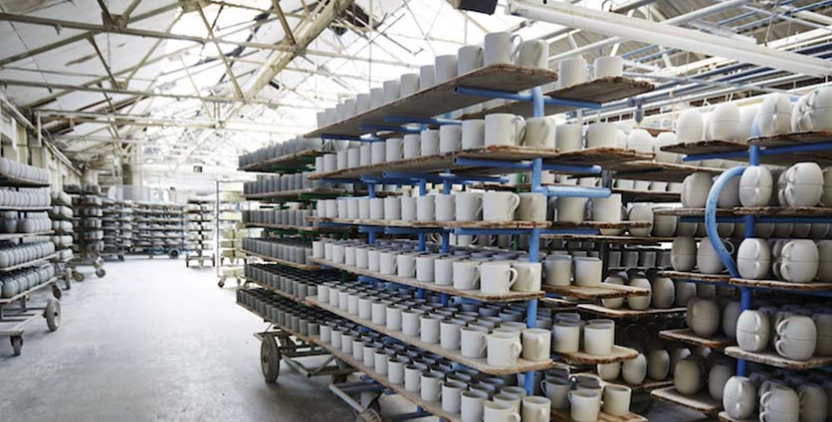
The GMB union has urged the government to commit to using UK-made pottery and tableware in all British embassies and High Commissions worldwide, as part of an effort to support the country’s struggling ceramics industry.
In a letter to Foreign Secretary David Lammy, GMB General Secretary Gary Smith said such a move would “send a clear message that we put UK manufacturing at the heart of everything we do as a country” while promoting one of Britain’s most recognisable and historic industries on the global stage.
Smith warned that the ceramics sector, which employs more than 20,000 people across the UK, is “at a crossroads” following years of political neglect, soaring energy costs for gas-fired kilns, and mounting competition from counterfeit imports.
“UK ceramics are the envy of the world, but political failure has left our pottery firms battling against eye-watering costs to keep their kilns lit,” Smith wrote. “With a network of more than 300 embassies and High Commissions, the UK has a golden opportunity to showcase the best of UK pottery at embassies across the world.”
The call comes amid a wave of closures in the industry. Three Staffordshire-based firms — Royal Stafford, Heraldic Pottery, and Moorcroft — have collapsed this year alone, resulting in the loss of hundreds of jobs and putting more communities at risk.
Smith praised the craftsmanship and international reputation of British potters, describing the sector as producing not only world-class tableware but also industrial ceramic components. He called on the Foreign, Commonwealth & Development Office to take “practical steps” to back the industry by sourcing goods from UK manufacturers that are unionised and listed on the GMB’s Potters’ Pledge website.
The GMB believes that adopting British-made ceramics in diplomatic settings would be both a symbolic gesture of support and a tangible way to boost domestic production. Such a policy, Smith argued, would help safeguard jobs, preserve traditional skills, and strengthen the UK’s manufacturing base at a time when it faces intense global competition.
The union has indicated it is ready to engage in further discussions with the government on how best to implement the proposal. It sees the initiative as a straightforward, cost-effective measure that could deliver economic, cultural, and reputational benefits for the UK.
“The UK ceramics industry has been neglected for too long,” Smith said. “Now is the moment to stand behind our potters, promote their work to the world, and ensure this vital British industry has a future.”
Follow latest Congressional news on our site