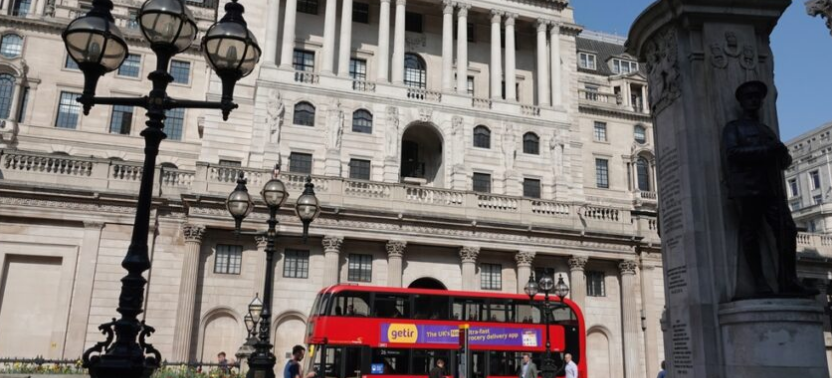
The Bank of England is expected to lower interest rates by a quarter-point to 4% today, marking its fifth cut in a year and signalling increased concern over a slowing UK economy despite a recent rise in inflation.
The Monetary Policy Committee (MPC) is set to announce its decision at midday following a closely watched vote. A narrow 5-4 split is anticipated, with Governor Andrew Bailey likely aligning with the majority in favour of a modest reduction from the current 4.25% benchmark rate.
The move would continue the Bank’s shift away from the aggressive monetary tightening cycle that saw interest rates reach a peak of 5.25% in August 2024. While inflation rose to 3.6% in June — the highest level in 18 months — policymakers appear increasingly focused on signs of economic weakness.
Recent data points to a fragile economic environment. GDP contracted by 0.3% in April and another 0.1% in May, while employment figures have been steadily declining. HM Revenue and Customs reported a fifth consecutive monthly fall in payroll numbers, in part due to April’s £25 billion hike in employer national insurance contributions.
“The economy has been weaker than the MPC anticipated,” said Sanjay Raja, chief UK economist at Deutsche Bank. “Growth is below expectations, unemployment is slightly higher, and wage pressures have eased more than projected.”
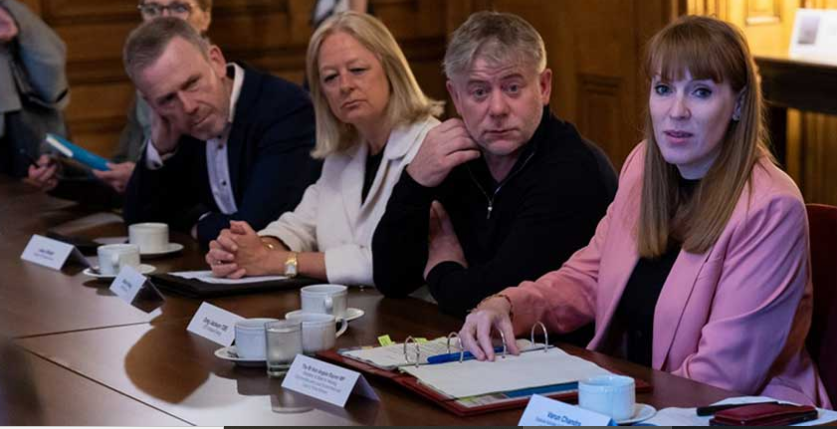
Internally, MPC members are thought to be leaning towards a cautious easing approach. However, external members Swati Dhingra and Alan Taylor may advocate for a deeper 0.5 percentage point cut, citing increased economic fragility. In contrast, Chief Economist Huw Pill and external member Catherine Mann are expected to favour holding rates steady, concerned by persistent inflationary pressures.
Despite the uptick in inflation, which remains well above the Bank’s 2% target, financial markets have largely priced in a rate cut. Analysts expect the central bank to maintain a measured tone, avoiding firm forward guidance while reiterating its commitment to gradual, data-dependent decisions.
“We’d expect the Bank to cut rates this month but offer very little in terms of forward guidance, besides reiterating its bias for further ‘gradual’ and ‘careful’ cuts,” analysts at ING said.
The rate decision will be accompanied by updated forecasts for growth, inflation, and employment through 2028, along with an assessment of the Bank’s ongoing bond sales and their effect on the government bond (gilt) market.
If confirmed, a cut to 4% would offer some relief to households and small businesses facing elevated borrowing costs. Still, with inflation remaining stubbornly above target, the Bank is expected to keep its options open — ready to adjust course should price pressures intensify.
Today’s announcement is likely to be viewed as a key signal of the central bank’s outlook on the UK’s post-pandemic economic recovery, and its willingness to support growth in the face of persistent headwinds.