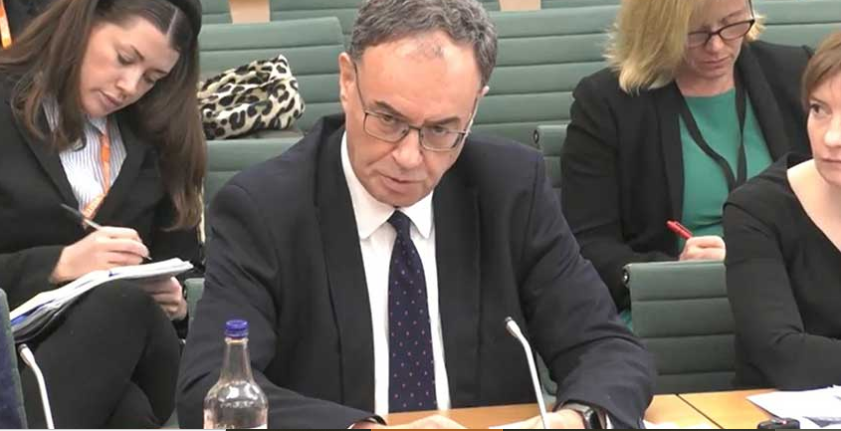
Bank of England Governor Andrew Bailey has issued a stark warning to Chancellor Rachel Reeves over her government’s plans to roll back key banking regulations, cautioning that such moves could destabilise the UK’s financial system and heighten the risk of a future financial crisis.
Speaking before the Treasury Select Committee on Tuesday, Bailey voiced concern over proposals to dismantle the post-2008 ringfencing rules that separate retail banking from riskier investment operations. “It would not be a sensible time to unwind these safeguards,” Bailey said, adding that the threat to financial stability remains “live” despite the passage of time since the last global crash.
His remarks come in direct contrast to Reeves’ recent Mansion House speech, where she described current regulations as a “boot on the neck” of business and suggested they were stifling growth and investment. The Chancellor is spearheading a broader review of financial regulations as part of Labour’s pro-growth agenda.
Bailey, who also chairs the global Financial Stability Board, stressed that while some policymakers may view the 2008 financial crisis as a distant memory, those who lived through it understand the enduring risks. “For those of us who were veterans of sorting the problems of [the financial crisis] out, the risk is very much still there,” he warned.
The governor’s comments came as new data from the Office for National Statistics (ONS) revealed that UK government interest payments soared to £16.4 billion in June—the second-highest on record for that month. Public borrowing also exceeded forecasts, reaching £20 billion, placing additional pressure on Reeves ahead of her first autumn budget.
Despite the rise in borrowing costs, Bailey maintained that the trend is not unique to the UK, citing a global increase in yields and market volatility linked to geopolitical tensions and higher deficits across major economies. “This is a global phenomenon—not unique to the UK,” he said.
The yield on the UK’s 30-year gilt has risen to 5.43%, up from 4.67% a year ago, while US Treasury yields have also climbed. Bailey attributed some of the recent instability to renewed trade tensions driven by US President Donald Trump’s reintroduction of reciprocal tariffs. He noted that investors have been reducing exposure to the US dollar, with the dollar index falling nearly 10% since January.
Meanwhile, UK equity markets have rebounded, with the FTSE 100 closing at a record high above 9,000 this week, buoyed by gains in global tech stocks and investor hopes of interest rate cuts later this year.
While Bailey avoided directly criticising Reeves, he made clear that he would not characterise financial safeguards as a burden on business. His intervention underscores growing unease within regulatory circles over the potential consequences of deregulation at a time of rising economic uncertainty and global market disruption.