BT has issued a stark warning that Britain’s 5G ambitions are being seriously undermined by outdated planning regulations and limited mobile spectrum availability, threatening a potential £230 billion economic boost by 2035.
In a strongly worded statement, the telecoms giant urged the newly elected government to prioritise urgent reforms that would fast-track the rollout of “5G standalone” (5G SA) networks—next-generation infrastructure that operates independently of 4G and delivers significantly faster, more reliable connections.
According to BT, the UK faces more barriers to mobile infrastructure deployment than almost any other advanced economy, with excessive bureaucracy, under-resourced local planning authorities, and rigid rules delaying progress.
Howard Watson, BT’s Chief Security and Networks Officer, said: “The UK seems to have made it the hardest of anywhere to build mobile infrastructure. Unless we remove unnecessary roadblocks and make more spectrum available, we risk missing out on a once-in-a-generation opportunity to boost growth.”
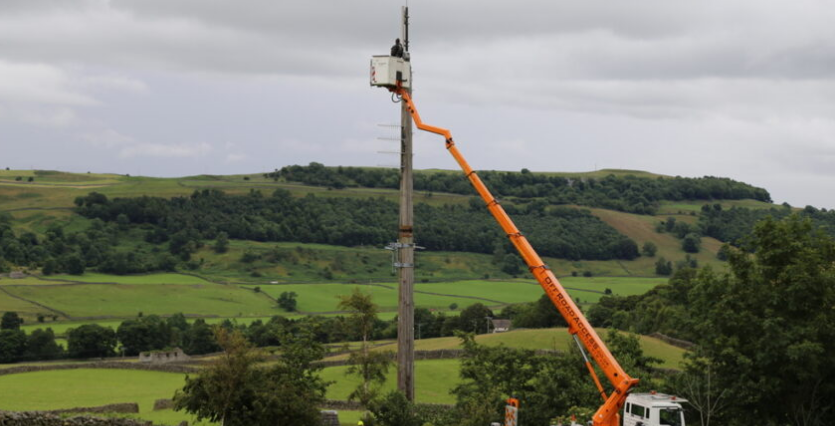
BT is calling for immediate changes to planning policy, including raising the maximum permitted height for phone masts from 15 to 20 metres—an adjustment it claims could reduce infrastructure deployment times by up to 12 months.
The warning is underpinned by new research from consultancy Assembly, which projects that fast-tracking 5G SA could unlock £230 billion in value by 2035. Of that, £124 billion would be concentrated in urban areas, where enhanced connectivity could enable cutting-edge technologies such as AI, automation, and robotics.
Expanded 5G coverage along the UK’s road and rail networks could also pave the way for innovations such as autonomous vehicles and improve productivity for commuters and business travellers.
Stay informed with the latest UK economic and political news at Heraldberg.
However, concerns are mounting that the UK is falling behind. Frontier Economics estimates a £20 billion gap between current telecoms sector investment capacity and the funding needed to deliver full 5G SA coverage. As of now, just 42% of the population has access to 5G SA.
BT, whose mobile network EE is one of the UK’s top three providers, is also urging the government to double the spectrum allocated for national mobile services by releasing new frequency bands currently held for other uses.
Despite strong government ambitions to deliver universal 5G SA coverage by 2030, telecoms operators warn that without regulatory changes, those targets are in jeopardy.
In response, the Department for Science, Innovation and Technology reiterated its commitment: “Access to fast and reliable mobile coverage is critical to economic growth. We are on a mission to deliver high-quality 5G standalone coverage to all populated areas by 2030. This includes removing planning barriers and ensuring the right regulatory framework to support investment and competition.”
With digital infrastructure playing a central role in economic recovery and future growth, industry leaders will be watching closely to see if the new government’s promises translate into meaningful action.