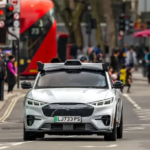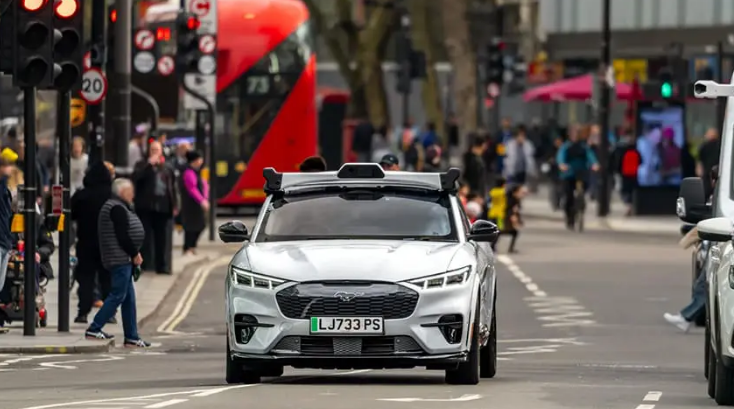
London passengers can now book rides in self-driving vehicles through Uber for the first time, marking a significant step in the expansion of autonomous transport in the UK capital.
Uber added Wayve’s autonomous vehicles to its app on September 3, initially offering rides in a small fleet of 15 cars. A trained safety driver remains seated in the front of every vehicle and can take control if necessary.
The launch comes after Transport for London licensed modified Ford Mustang vehicles operated by Uber and Wayve as private hire vehicles in August. The current licences require a safety driver to supervise each journey.
Full approval for vehicles to operate without a human safety driver requires a separate government process involving the Driver and Vehicle Standards Agency. Such approval is now considered unlikely before the end of the year.
The Department for Transport opened applications in May for companies seeking to operate self-driving taxi and bus services under a pilot programme.
Uber’s launch gives the company an early position in London’s emerging autonomous taxi market, which is regarded as an important test for future expansion across Europe. Google-owned Waymo and Chinese technology company Baidu are also testing autonomous vehicles in the capital.
Wayve co-founder and chief executive Alex Kendall said the company was pleased to bring its AI driving technology to London, describing the city as one of the world’s most challenging driving environments.
He said the technology was still developing but expected fully driverless services to eventually follow. Wayve plans to move toward vehicles produced specifically for autonomous operation, including Nissan Leaf models equipped with its technology.
The company must demonstrate the safety performance of the new vehicles and secure the necessary regulatory approvals before removing the safety driver.
Unlike some competitors that depend heavily on detailed maps, Wayve’s system uses an AI-based learning model to navigate roads. Uber and Wayve began working together on autonomous driving trials in London in 2025.
Passengers book and unlock the vehicles through the Uber app. At the start of each journey, the safety driver explains that they will remain silent during the trip but can take control if requested.
Uber’s head of autonomous mobility, Sarfraz Maredia, said the long-term benefits for passengers could include lower prices and improved safety. He acknowledged that autonomous rides are not currently cheaper than conventional trips involving human drivers.
The introduction has also raised concerns among transport workers and unions. Maredia said Uber did not expect autonomous vehicles to eliminate human drivers, arguing that the company’s growing business could support both types of service.
Transport Secretary Heidi Alexander called the launch an important milestone for London and British technology.
However, GMB union senior organiser David McMullen warned that the introduction of driverless vehicles could create major social and economic disruption if the technology expands too quickly.
London’s first autonomous Uber rides therefore mark only the beginning of a wider debate over safety, regulation, jobs and the future of urban transport.